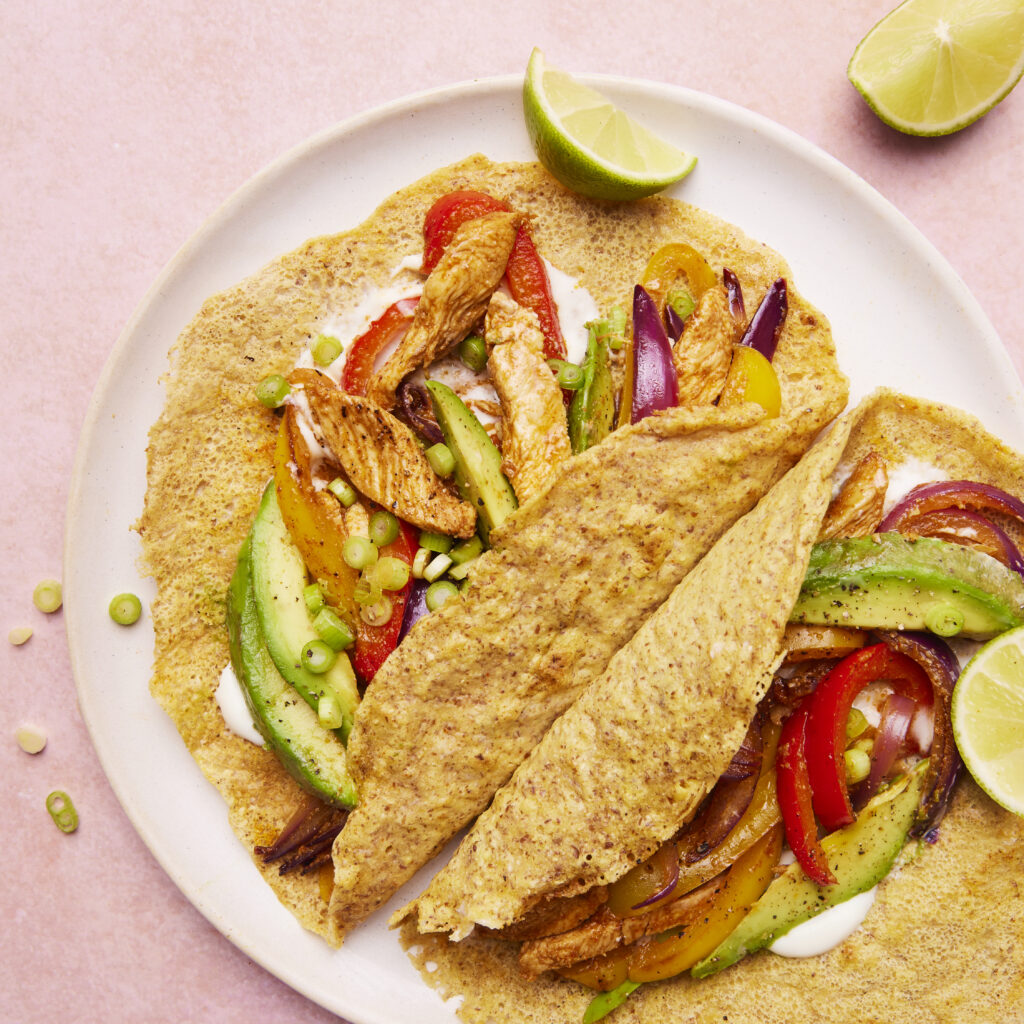
This easy and delicious Chicken Fajitas recipe is taken from my new book Eat Right, Balance Hormones which helps you uncover the root cause of hormonal imbalances and shows how you can adjust your diet in order to achieve a better balance.
Ingredients
Serves 2
- 1 tsp Smoked paprika
- 1 tsp Cumin
- ½ tsp Dried garlic
- ½ tsp Cayenne
- Juice ½ Lime
- 2 tbsp Coconut oil, melted
- 250g Chicken breast, cut into thin strips
- 1 Red pepper, sliced
- 1 Small pepper, sliced
- 1 Red onion, sliced
- 3 tbsp Plant based yoghurt
- 1 Avocado, sliced
- 2 Spring onions, finely sliced
- Lime wedges to serve
Tortillas:
- 2 tbsp Milled flaxseed
- 90g Chickpea flour (Gram flour)
- ½ tsp Smoked paprika
- Pinch Salt
- Coconut oil for cooking
Method
- Mix the ground flax with 2 tbsp warm water and set aside for 5 mins to thicken.
- Add chickpea flour, paprika and salt then pour the water in, a little at a time, whisking into a smooth batter.
- Heat coconut oil in a frying pan over a medium/high heat and pour 1/4 of the batter in, swirling the pan to evenly coat the bottom. Cook for 1-2 minutes or until golden then flip and cook for a further 1-2 minutes. Repeat for the remaining batter.
- Now prepare the fajita filling. Mix the spices with the lime juice and coconut oil in a large bowl then tip in the chicken and vegetables and toss to coat evenly.
- Heat a large frying pan over a medium/high heat then cook the chicken and vegetables for 5-6 minutes, stirring regularly, until the chicken is cooked through.
- To serve, divide the yoghurt between the tortillas and spread down the centre of each one. Top with the fajita mix and sliced avocado. Sprinkle over the spring onions and serve with lime wedges.
Rich in high-quality protein, chicken aids in maintaining muscle mass, which tends to decline with age and hormonal changes. Protein is essential for women in perimenopause, as it can help in managing weight and stabilizing mood swings, both common challenges during this phase. Chicken is also a significant source of vitamins B6 and B12, nutrients crucial for energy production and the proper functioning of the nervous system, thus potentially alleviating fatigue and mood irregularities often experienced during perimenopause. Moreover, the lean protein and iron found in chicken support overall strength and energy levels, which can be particularly beneficial for combating the sluggishness and lethargy that sometimes accompany perimenopause. Additionally, chicken contains selenium and zinc, minerals that play a role in supporting immune function and skin health, both of which can be affected by hormonal fluctuations.