This is the start of my thyroid series. Stay tuned for daily posts!
Why is Thyroid Health Important?
Thyroid health is so important because when your thyroid isn’t working properly, it can impact your entire body. The thyroid is a gland in our necks which produces the T3 and T4 thyroid hormones. These hormones travel throughout the body controlling the speed at which it works – otherwise known as our metabolism!
T3 and T4 hormones are powerful and can affect our:
– Digestion
– Energy levels
– Heartbeat
– Body temperature
– How we think and feel
The thyroid is a small gland with a big effect (!) and we need to keep it as balanced as possible ⚖️
If we have too little thyroid hormone circulating in our bodies, our cells work too slowly (hypothyroidism) and if the gland produces too much, cells work too quickly (hyperthyroidism).
Our brains monitor how much thyroid there is in the blood and if it’s low, it instructs the pituitary gland to release more TSH (thyroid stimulating hormone) which in turn tells the thyroid gland to secrete more hormones into the body. If the gland is already producing too much, the brain reduces the amount of TSH to the thyroid.
However different things can affect our thyroid and how well it does it’s job! 😬
– Stress. When you are under stress, your thyroid can produce reduced amounts of hormones leading to an underactive thyroid, symptoms of which include tiredness, weight gain and low mood/anxiety.
– Childbirth. Postpartum thyroiditis happens when a woman’s thyroid gland becomes inflamed after having a baby although this is fairly rare.
– Inflammation due too poor diet, gut health and chronic infections.
– Toxins such as heavy metals aluminum, lead, and mercury. BPA, pesticides and more.
– HRT. Women with pre-existing hypothyroidism treated with thyroxine, may require an increase in their thyroxine dose after starting HRT. Therefore it is useful for thyroid function tests to be re-checked after starting HRT. HRT can also block thyroid receptors so it’s good to get thyroid checked.
Hypothyroidism (or ‘low thyroid’) occurs when your thyroid gland is not producing and secreting enough T4 hormone into your body and is the most common thyroid condition.
Many people will just think of weight gain as a symptom of low thyroid but unfortunately symptoms are really wide ranging and can include the following:
– Weight gain; difficulty losing weight over time
– Tiredness
– Coldness
– Constipation
– Dry/thinning hair
– Muscle weakness and aches
– Hoarse voice
– Pins and needles in the hands
– Slow speech, movements and thoughts
– Low mood and anxiety
– Memory problems
– Concentration problems
– Low/high blood pressure
– Morning headaches which wear off during the day
– Reduced sex drive
– Infertility
– Cystic ovaries/breasts
– High cholesterol
– PMS
– Painful periods
– Deafness
– Perimenopausal symptoms
– Coronary artery disease
– Seasonal sadness
– Tendency to depression
– Cracked skin on heels
– Psoriasis
– Dry skin
If you feel you may have low thyroid, the next best step is to get tested. You can ask your GP for a blood test but they may only test TSH. You can do an at home thyroid test (link in my bio) which tests all thyroid hormones and antibodies. DNA testing can look at the bigger picture and also help when bloods look normal.
We can then assess and decide what dietary changes and neutraceuticals (supplements) will help. In many cases clients’ symptoms will resolve with this functional medicine approach.
When testing thyroid, most doctors will only test for TSH (thyroid stimulating hormone) yet the most common thyroid markers are TSH, T4 and T3 hormones.
The thyroid gland secretes fairly small amounts of T3 but it’s this active, fat-burning form that the body can use -T4 must be converted into T3 for the body to use it (note the NHS does not usually test T3 levels).
Most of T4 to T3 conversion happens within the liver but it also takes place in the cells of the heart, muscle, gut and nerves.
This is why it’s not always as simple as just taking a supplement to support T4 to T3 conversion.
About 60% of T4 is converted into T3 and around 20% becomes reverse T3 (rT3). rT3 is an inactive form of T3 that is unusable by the body and of which levels increase when we become stressed, traumatised, go through surgery or chronic illness and sometimes in periods of prolonged fasting.
20% of T4 is converted to T3 in the intestines but a healthy gut flora is needed to optimise the process. Poor diet and digestion can inhibit things leading to reduced thyroid conversion 😬
The liver metabolises hormones, filters toxins and cleans the blood, transporting by products to the gallbladder for final excretion out of the body. However, if we have low thyroid, the whole process becomes sluggish and congested and the liver struggles to convert T4 to T3.
When the liver fails to be able to break down hormones, the hormones return back into the bloodstream even more toxic than before ☠️ which is definitely NOT what we want!
Elevated levels of oestrogen in the body (through oestrogen not being able to be detoxified) can affect the thyroid function because it prevents the liver being able to convert T4 to T3.
However, DNA testing can provide clarity on T4 to T3 conversion and we are able to measure the amount of T3 levels in the body. Low levels due to poor conversion result in tiredness, weight gain / difficulty losing weight over time and dry skin to name but a few symptoms.
If you have had your thyroid tested and know that it’s on the low side or suspect you may have low thyroid because of symptoms, one step you can take is to adjust your diet to include foods that will help it function more optimally ✨
Of course it’s best to get tested if you are having moderate symptoms but food is an amazing medicine so alongside supplements or medication, it can help to provide the required nutrition to restore thyroid function and minimise negative symptoms 😊
I’m running for an hour 5 days a week and not losing weight!
I hear this all the time in clinic and in messages from many of you. And it’s so frustrating for you when you think you are doing everything right but not losing weight or even gaining!
So talk about this exercise and weight connection🧐
You keep hearing ‘exercise more and eat less’ to lose weight?
Studies show that excessive cardio training can switch off the production of the thyroid hormone T3 in women. Check back on yesterday’s post about this often not talked about Thyroid hormone.
T3 is the most prominent metabolic regulator, which is responsible for the efficiency of the cells and body temperature regulation. Basically when the T3 hormones are at a normal level, the body also burns enough energy to keep warm and to maintain the muscle function with moderate efficiency. We need energy to lose weight!
Due to too much cardio and especially steady-state-cardio women can often move themselves into a state of hypothyroidism which can lead to weight gain.
We humans are an adaptive species and can withstand a certain amount of stress thanks to our survival instinct. But high energy consumption sends out danger signals to the body, which in turn switches into “survival mode” and the metabolism is lowered to save energy. Instead of burning the desired body fat, this is stored for the protection of the body. And it gets even worse: the body continues to hang on to its fat cells even after training. In addition, too much muscle mass is lost due to too much steady-state cardio since the body takes the energy mainly from the muscles and not from the unwanted fat cells.
If you over-train, you may start to notice increased fatigue, mental fogginess, weight gain, decreased libido, low energy, and feeling colder in the arms or legs.
What Can You Do To Improve Your Thyroid Health?
First, take a break from cardio. The body takes time to bring its T3 level back into balance. The belief that excessive cardio training is the solution to a well-shaped body is a myth. Weight training especially the combination with short HIIT units is much more effective.
The following foods are often advised if you are suffering from hypothyroidism, the most common form of thyroid disorder. But if in doubt please seek professional advice. Aim to eat foods which are rich in iodine, selenium, iron and glutathione:
🥚 Eggs. Best eaten whole as much of their iodine and selenium are found in the yolk, while the whites are full of protein
🍗 Meats – all meats including chicken, beef, lamb, turkey -these all provide good levels of selenium
🐟 Fish (all types of seafood)
🥦 Vegetables. Avoid eating raw cruciferous veg though, ensure they’re lightly steamed (cruciferous veg = arugula, bok choy, broccoli, Brussels sprouts, cabbage, cauliflower, collard greens). Mushrooms have fairly high levels of selenium. Seaweed is one of the best natural sources of iodine.
🍎 Fruits (bananas are higher in selenium than other fruit but due their high sugar content then best not to eat too often)
🥜 Grains, nut and seeds – rice, sunflower seeds, quinoa, chia seeds, and flax seeds and Brazil nuts.
💊 the above can also be supported through supplements but diet should always be considered first. In clinic I often recommend nutrients such as selenium, zinc, iodine, and thyroid glandulars. But always taking into account root causes and looking at ALL hormones together.
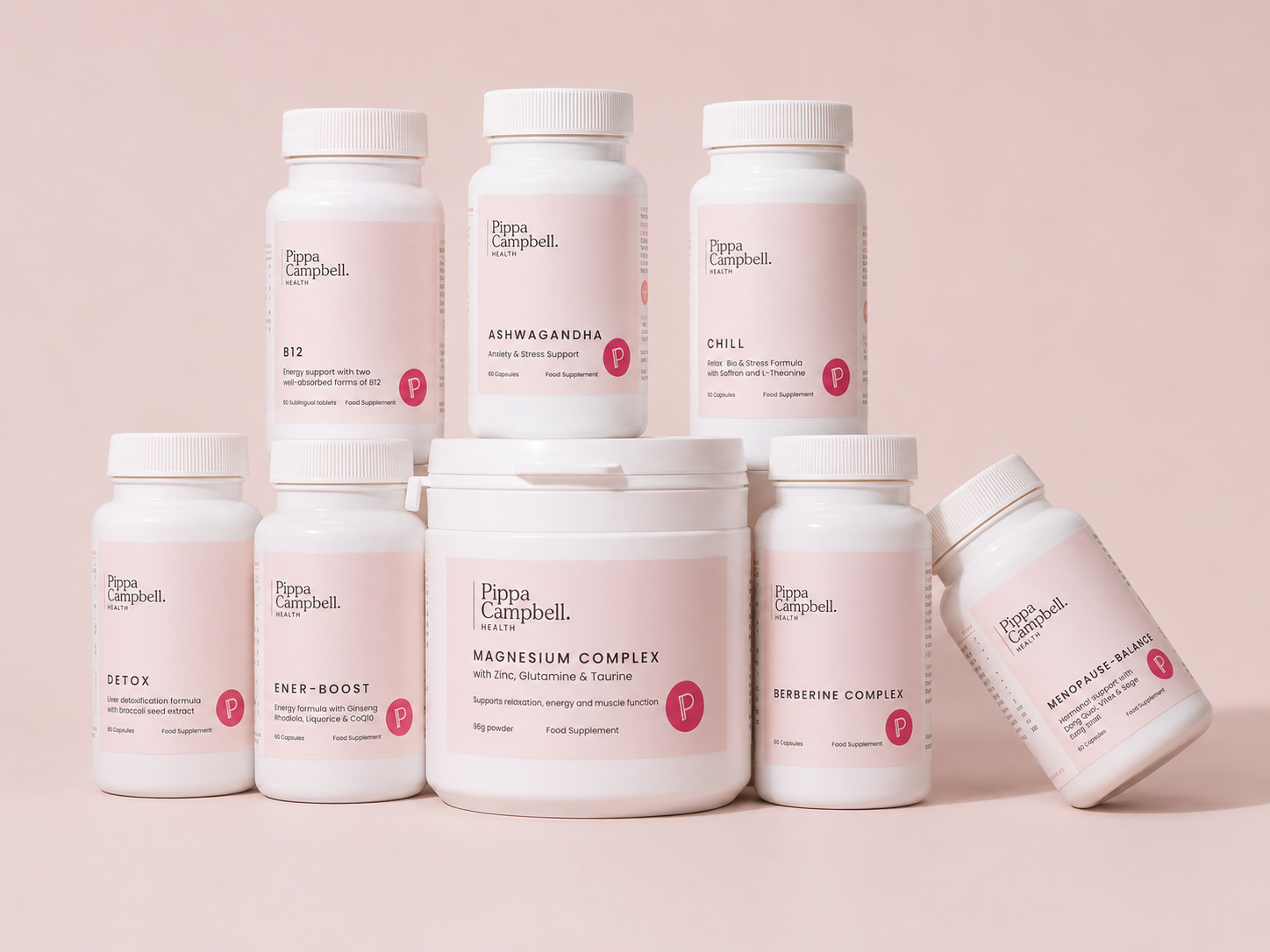
Pippa Campbell Health Meta-Boost supports a thyroid function.