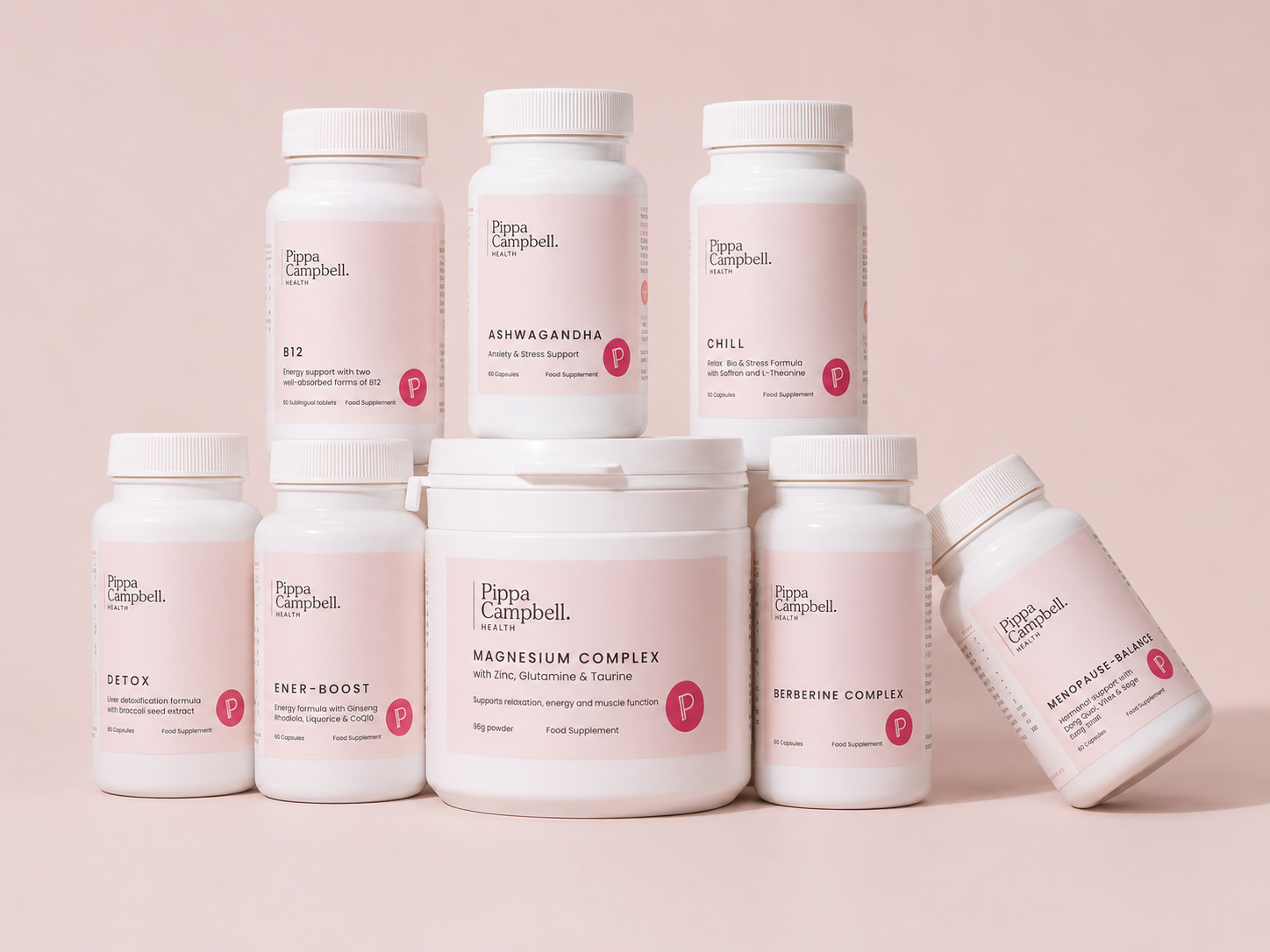
The Pippa Campbell Method (PCM) is a sustainable, balanced way of eating and lifestyle based on your personal needs. It combines my 5 Foundations of excellent eating with your personal assessment to create your optimal nutrition and health plan. ALL my practitioners are trained in the PCM and use this method when treating clients.
The Aim of the Pippa Campbell Method is to Rebalance Your Body
In particular, clients report:
-
Better gut health
-
Balanced hormones
-
Deeper, longer sleep
-
Increased energy and vitality
-
Weight loss
The PCM Has 5 Key Principles
1. Finding the root causes. Women often have symptoms including not being able to lose weight, lack of energy, hormonal issues, bad sleep and gut issues. Our job is to find the body imbalances that are causing them. This starts with a personal assessment and may also include functional and DNA tests.
2. Empowerment. We explain what’s happening in your body, such as the gut and digestion, hormones, blood sugar and thyroid, and how imbalances in these symptoms affect your wellbeing and weight. Once you understand how your body works, it will make sense to you to eat the foods that make you feel good.
3. The 5 Foundations of eating (see below for details). These are the keys to the PCM way of eating, the solid base for the next step.
4. Personalised eating. A customised nutrition plan to treat the causes of your symptoms from the inside out, rebalancing your body, fuelling your wellbeing and healthy weight loss.
5. Forever eating. The PCM is not a short-term challenge or fad. It’s a forever way of eating that’s built on wholefoods and delicious recipes, so the benefits will last forever too. You’ll learn to flex the plan, so it fits your life, from takeaways to nights out, and holidays to work days.
The 5 Foundations of the PCM
Be positive about what you can do, don’t try to be perfect, and enjoy your food!
1. Start each meal with two bites of protein
This is the key to appetite control, helping you feel more satisfied, fast. Protein gives you the building blocks for muscle and promotes hormone health, so make sure you’re eating enough. One portion is (roughly): 1 chicken breast, leg or two thighs, 1 fish fillet, 150g (usually half a pack) of tofu, 110g to 150g beef, pork, lamb, turkey or venison, 2 to 3 eggs, 120g to 150g cooked chickpeas, lentils or beans.
2. Leave four to five hours between meals
And finish eating all your food by 7pm. Try to avoid snacking but if you can’t, have a glass of water and a few bites of protein. Remember, it’s normal to be hungry for your next meal! A typical schedule looks like this: 7.30am–8am, breakfast. 1pm–1.30pm, lunch. 6.30pm–7pm, dinner. You can adapt it to what suits you.
3. Drink two litres of water a day
Hydration is key to all the body’s processes and most of us don’t drink enough water. Aim for two litres, more if it’s hot or you’ve exercised. Start by taking a large glass of water to bed and drink it as soon as you wake up.
4. Chew each mouthful (up to) 30 times
Chewing kickstarts your stomach acid and digestive enzymes as well as manually breaking down the food so it’s easier for the rest of your digestion to do its job of extracting the nutrients. If you don’t chew well, the food will move more slowly through the digestive tract and can start to ferment, which leads to bloating and wind, as well as constipation. Aim for 30 chews or stop before if your food has turned to mush.
5. Take the vegetable challenge
Vegetables are the absolute key to health. Every day, try to eat four (or more) vegetables and then, the next day – and this is key – have four different ones (finish day one vegetables on day three). Frozen are fine! A variety of plant foods supplies us with a range of antioxidants and helps increase the diversity of the bacteria in our microbiome. And the microbiome is key to digestion, the immune system, metabolism and weight.
The PCM and 5 Foundations are a key part of my book ‘Eat Right, Lose Weight’. Buy now.