Anxiety that seems to come from nowhere. Waking at 2 or 3am with your mind racing. Heavier periods, spotting before your period, worsening PMS, heart palpitations or suddenly feeling far more sensitive to stress. These can all be signs of low progesterone, and they can happen at any age, not just during perimenopause.
I’ve worked with women and their hormones for 20 years and I’ve seen low progesterone in women of all ages. In younger women it might be spotting, a short luteal phase, PMS, difficulty conceiving or recurrent miscarriage. By perimenopause, periods may become heavier or closer together, sleep can suddenly become a problem and women who have never considered themselves anxious can start waking in the night with their heart racing.
Progesterone is still thought of mainly as a reproductive hormone, or the hormone you take alongside oestrogen HRT to protect the womb lining. It does far more than that.
And a normal progesterone blood result doesn’t always tell us what we need to know.
15 signs of low progesterone
These are some of the signs I see in clinic:
- Waking between 2 and 4am
- Anxiety or feeling on edge
- Feeling wired but exhausted
- Heart palpitations or adrenaline surges
- PMS or PMDD
- Spotting before your period
- A short luteal phase or shorter cycles
- Heavy periods
- Breast tenderness
- Bloating and fluid retention
- Hormonal headaches or migraines
- Difficulty falling asleep or staying asleep
- Difficulty conceiving
- Recurrent early miscarriage
- Night sweats or worsening perimenopause symptoms
You don’t need to have all of these symptoms and they can have other causes. In clinic we use symptoms as a guide but rarely diagnose low progesterone from symptoms alone. We need to know what your hormones are doing and what your body is doing with the progesterone you produce.
Progesterone, anxiety and waking at 3am
Progesterone has a major effect on the brain and nervous system.
One of the ways your body metabolises progesterone produces allopregnanolone, a neurosteroid that acts on GABA-A receptors in the brain. GABA is one of our main calming neurotransmitter systems.
When progesterone falls, some women become much more sensitive to stress. They wake at 2 or 3am completely alert, experience adrenaline surges or palpitations, suddenly can’t tolerate caffeine or feel anxious when there is no obvious reason for it.
I hear this all the time in clinic, particularly during perimenopause.
Progesterone can be falling because ovulation is becoming less reliable while oestrogen is still fluctuating dramatically. At certain points oestrogen can still be very high.
You can therefore have plenty of oestrogen activity without the progesterone you previously produced after regular ovulation.
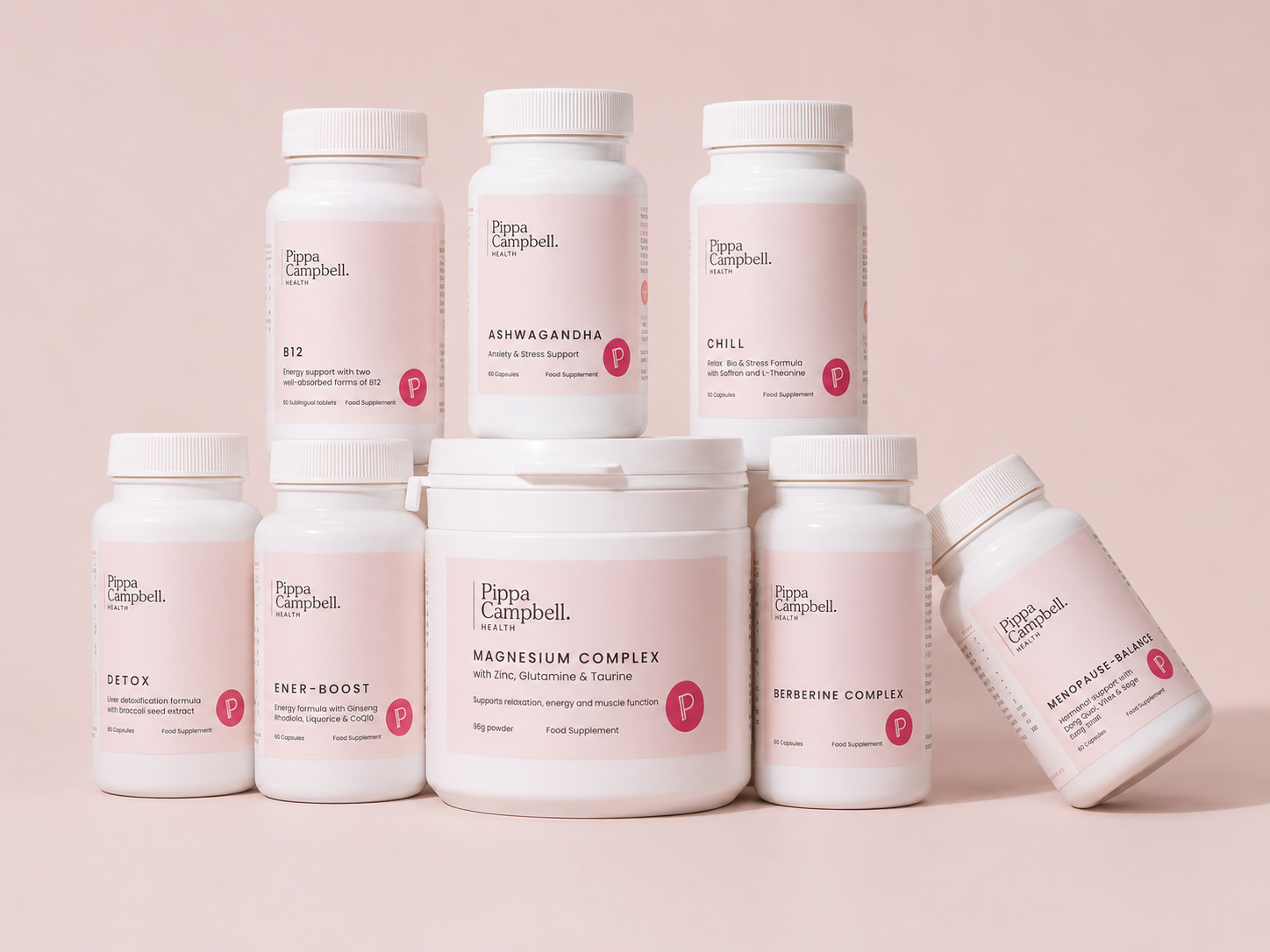
If anxiety, poor sleep and that wired-but-exhausted feeling are familiar, magnesium is also something I consider. Magnesium is involved in normal nervous-system function and GABA activity, and requirements can be difficult to meet through food alone. My Magnesium Complex combines magnesium bisglycinate, citrate and malate with taurine and zinc and is one I use regularly when sleep, tension and an overactive nervous system are part of the hormone picture.
Low progesterone can happen at any age
Progesterone is produced predominantly by the corpus luteum after ovulation.
If you don’t ovulate, you don’t get the normal rise in progesterone afterwards.
I don’t see low progesterone as purely a perimenopause problem.
I’ve worked with much younger women with spotting before their period, short luteal phases, severe PMS, irregular ovulation, difficulty conceiving and recurrent early miscarriage where progesterone is part of the picture.
Stress, under-eating, excessive exercise and low thyroid function can all interfere with normal ovulation. Perimenopause makes anovulatory cycles more common, which is why progesterone can start declining years before periods finally stop.
Low progesterone, spotting and heavy periods
Progesterone helps regulate the endometrium, the lining of the womb.
When ovulation becomes less consistent and progesterone falls, the relationship between oestrogen and progesterone changes. Periods can become heavier, longer, closer together or less predictable.
Spotting before a period is something I always pay attention to, particularly when it happens month after month. I want to know when she is ovulating and whether progesterone is rising properly afterwards.
PMS can worsen too. Anxiety, irritability, breast tenderness, headaches, bloating and disturbed sleep can all become much more noticeable in the second half of the cycle.
For women in perimenopause, I also use Peri-Balance as broader nutritional and botanical support through the hormonal fluctuations that happen at this stage.
Progesterone and fertility
Progesterone prepares the endometrium for implantation and supports early pregnancy.
If I’m working with a woman who is struggling to conceive, has a consistently short luteal phase, several days of spotting before her period or a history of recurrent early miscarriage, progesterone needs investigating.
But I don’t want one random progesterone blood test and a tick beside “normal”.
Timing is crucial.
Why I don’t rely on a progesterone blood test alone
Women come into clinic having been told their progesterone is normal, but when I ask when it was tested, quite often the result doesn’t tell me very much.
Progesterone isn’t released at one steady level throughout the day. It is secreted in pulses and changes enormously depending on where you are in your cycle.
For a cycling woman, I want the test timed in relation to her ovulation, not automatically “day 21”.
Day 21 only makes sense when ovulation has happened at the expected point in that particular cycle.
If you’re taking progesterone, timing in relation to the dose also needs to be considered. A morning serum result tells us what is circulating at that point. It doesn’t tell me the whole story of how you have metabolised that progesterone.
I want more information than that.
What DUTCH testing tells me about progesterone
DUTCH Complete lets me look at progesterone metabolites rather than relying on serum progesterone alone.
I can see the relative activity of the 5-alpha and 5-beta progesterone pathways. At the same time, I can look at oestrogen metabolites, DHEA and cortisol and cortisone patterns across the day.
If a woman is still cycling and I need to understand what is happening across the month, I may use DUTCH Cycle Mapping. We can follow oestrogen and progesterone metabolites across the cycle rather than looking at one isolated day.
I can see whether she is ovulating, what happens to progesterone afterwards and how that relates to the symptoms she experiences at different points in the month.
5-alpha and 5-beta progesterone metabolism
Most women have never been told that there are different ways of metabolising progesterone.
Your body doesn’t just produce progesterone. It has to convert and metabolise it.
DUTCH testing allows us to see the relative balance between the 5-alpha and 5-beta progesterone metabolite pathways. I’m interested in this because progesterone metabolites have different neuroactive properties.
It can help us understand why two women can take the same progesterone and have completely different experiences.
One sleeps better and feels calmer. Another feels groggy. Another becomes more anxious. Another tells me it has done absolutely nothing.
Giving every one of those women the same dose in the same form doesn’t make sense to me.
If you are already taking progesterone and still don’t feel right, a Discovery Consultation gives us the opportunity to look at the whole picture and decide whether hormone metabolite testing would give us useful information.
Why can progesterone make some women feel worse?
Progesterone is usually described as calming, and for many women it is.
Some women are very sensitive to changes in progesterone and its neuroactive metabolites. I pay particular attention to a history of severe PMS or PMDD because these women can be more sensitive to changes in allopregnanolone signalling.
If somebody tells me progesterone has made her anxious, agitated, low or very groggy, I don’t dismiss it.
I want to know what she is taking, how much, when she takes it, how she takes it, whether she is still cycling and what the rest of her hormone picture looks like.
Sometimes we need to look at the dose. Sometimes the route needs looking at too.
Oral progesterone, vaginal progesterone, cream and compounded progesterone
How you take progesterone changes how your body processes it.
Oral micronised progesterone passes through the liver and undergoes extensive first-pass metabolism, producing neuroactive metabolites including allopregnanolone.
It can work extremely well for sleep in some women. Another woman may feel very sedated or groggy on it.
Vaginal progesterone has a different absorption profile. Transdermal progesterone cream is different again, as are compounded buccal or sublingual preparations.
I don’t see these as interchangeable.
There are times when changing the route makes more sense than continuing to increase a tablet that doesn’t suit the woman taking it.
On days when I want something more immediate than an oral dose, I use Peace Serum, a topical progesterone serum, or the Platt progesterone cream, which I have added to my Pippa Loves page.
Is 100mg or 200mg of progesterone enough?
There isn’t one dose that suits every woman.
In standard HRT prescribing, micronised progesterone is commonly given as 100mg continuously or 200mg cyclically, depending on the HRT regimen.
Those numbers have become so familiar that women can assume anything higher must be an unusually high dose.
There is clinical research using 300mg oral micronised progesterone (Dr Prior), including studies looking at sleep, hot flushes and night sweats. Dr Katharina Dalton’s historical work with natural progesterone for PMS and postnatal depression also used considerably higher doses.
That does not mean every woman needs more progesterone.
Dose needs to be considered alongside symptoms, oestrogen exposure, bleeding pattern, route and the reason progesterone has been prescribed.
If progesterone is being prescribed as part of HRT, particularly alongside systemic oestrogen, any dose change needs to be managed by the prescribing clinician.
Progesterone and oestrogen
Perimenopause isn’t a neat, gradual decline in all your hormones at the same time.
Progesterone can be falling while oestrogen is still fluctuating wildly. You can have periods of very high oestrogen and much less progesterone because you are no longer ovulating consistently.
I see women increasing their oestrogen because they are still symptomatic, but nobody has gone back and looked at progesterone alongside it.
If she has a uterus and is using systemic oestrogen HRT, adequate progestogen is essential for protecting the endometrium.
I also want to know how she feels. What has happened to her sleep? Has she developed breast tenderness? Has bleeding changed? Is she more anxious? Is she getting headaches? What was happening before HRT was started?
Hormones don’t work in isolation.
Natural progesterone and synthetic progestogens (Mirena coil, OCPs) are not the same
Micronised progesterone is structurally identical to the progesterone our own bodies produce. Synthetic progestogens are not.
Levonorgestrel, for example, is the synthetic progestogen used in the Mirena coil and some contraceptive pills. It can have androgenic effects and, for some women, can contribute to acne and weight gain.
In clinic we see so many women who have been given the Mirena as part of their HRT and have been told they are replacing their progesterone. They’re not. The levonorgestrel is there to protect the lining of the womb, but it does not replace progesterone or do everything our own progesterone does in the body. We also see very low levels of a woman’s own progesterone on DUTCH testing when ovulation is being suppressed.
Progesterone has hundreds of roles in the body. It affects the brain and nervous system, sleep, mood, body temperature, bones and breasts. So while the Mirena may be protecting the lining of the womb, that does not mean a woman has replaced her progesterone. She can still be struggling with anxiety, poor sleep and night sweats.
And this is where I think women are being given the wrong message. I hear women, including women in the public eye, saying they are “replacing their progesterone” with the Mirena coil. They are not. Levonorgestrel is a synthetic progestogen. Micronised progesterone is progesterone. They are not interchangeable.
Progesterone, thyroid and stress
I also want to know what is happening with thyroid and stress hormones.
Low thyroid function can interfere with reproductive function and ovulation. Chronic physiological stress can affect the signalling between the brain and ovaries and make normal ovulation less reliable.
You may have heard this called the “progesterone steal”, with the idea that the body steals progesterone to make cortisol.
It’s more complicated than that.
Long-term stress can disrupt the hormonal signalling needed for normal ovulation. If ovulation becomes inconsistent, progesterone falls.
When I’m looking at DUTCH results, I’m not only looking at progesterone. Cortisol, cortisone and DHEA give me another part of the hormone picture.
Blood sugar and progesterone
A woman can be taking progesterone and still feel anxious, shaky and wired if her blood sugar is fluctuating throughout the day.
Long periods of fasting don’t suit every woman, particularly during perimenopause.
I want protein at breakfast, regular meals where needed and no coffee on an empty stomach.
For the anxious, racing-mind feeling, I also use Chill alongside the wider hormone work. And magnesium comes back in here too. Magnesium Complex is one of the supplements I use when poor sleep, anxiety, muscle tension and an overactive nervous system are part of the picture.
Supplements are support. They don’t tell me whether a woman needs progesterone, how much she needs or which route will suit her.
How I investigate low progesterone in clinic
After 20 years of working with women and hormones, I know two women can arrive with almost identical symptoms and have very different hormone results.
Two women can both be waking at 3am.
One may have declining progesterone alongside fluctuating oestrogen. One may have a disrupted cortisol pattern. One may already be taking progesterone but not responding well to the dose or route. Another may have thyroid and blood sugar problems contributing to the same symptoms.
The Pippa Campbell Method is test-led. I want to know which woman I’m dealing with before deciding what she needs.
Depending on her age, symptoms and whether she is still cycling, we may use DUTCH Complete or DUTCH Cycle Mapping.
I want to know whether she is ovulating. Whether progesterone is rising after ovulation. What oestrogen is doing alongside it. How she is metabolising progesterone. What her cortisol and DHEA are doing. Whether thyroid function is part of the picture.
If she is already taking progesterone, I want to know whether the dose and route make sense for her.
A single serum progesterone result cannot give me all of that information.
If you recognise yourself in these symptoms, you’ve been told your progesterone is “normal” but still don’t feel right, or you’re taking progesterone and it isn’t giving you the improvement you expected, book a Discovery Consultation.
We can then decide whether DUTCH testing is right for you and which test will give us the information we need.