How Hormones Affect Migraines
Hormonal migraines can vary from woman to woman. For some women it prevents them from carrying on their daily life.
In clinic we do a full assessment and case history but one of the most important clues as to what is going on is finding out WHEN the client is getting the migraines in her cycle. This is because migraines can be due to high or low oestrogen, or fluctuations of oestrogen as well as low progesterone.
Hormonal migraines and headaches are more common with high, fluctuating oestrogen and relatively low progesterone, such as during perimenopause. That’s why menstrual migraines are more common between the ages of 40 and 55.
High oestrogen promotes migraines by stimulating immune cells to produce more prostaglandins and histamine. This can promote inflammation and pain but high histamine may also result in other symptoms such as hives or itchy skin, not just migraines.
Fluctuations of oestrogen can lead to a sudden withdrawal. This can disrupt the neurotransmitters serotonin and glutamate.
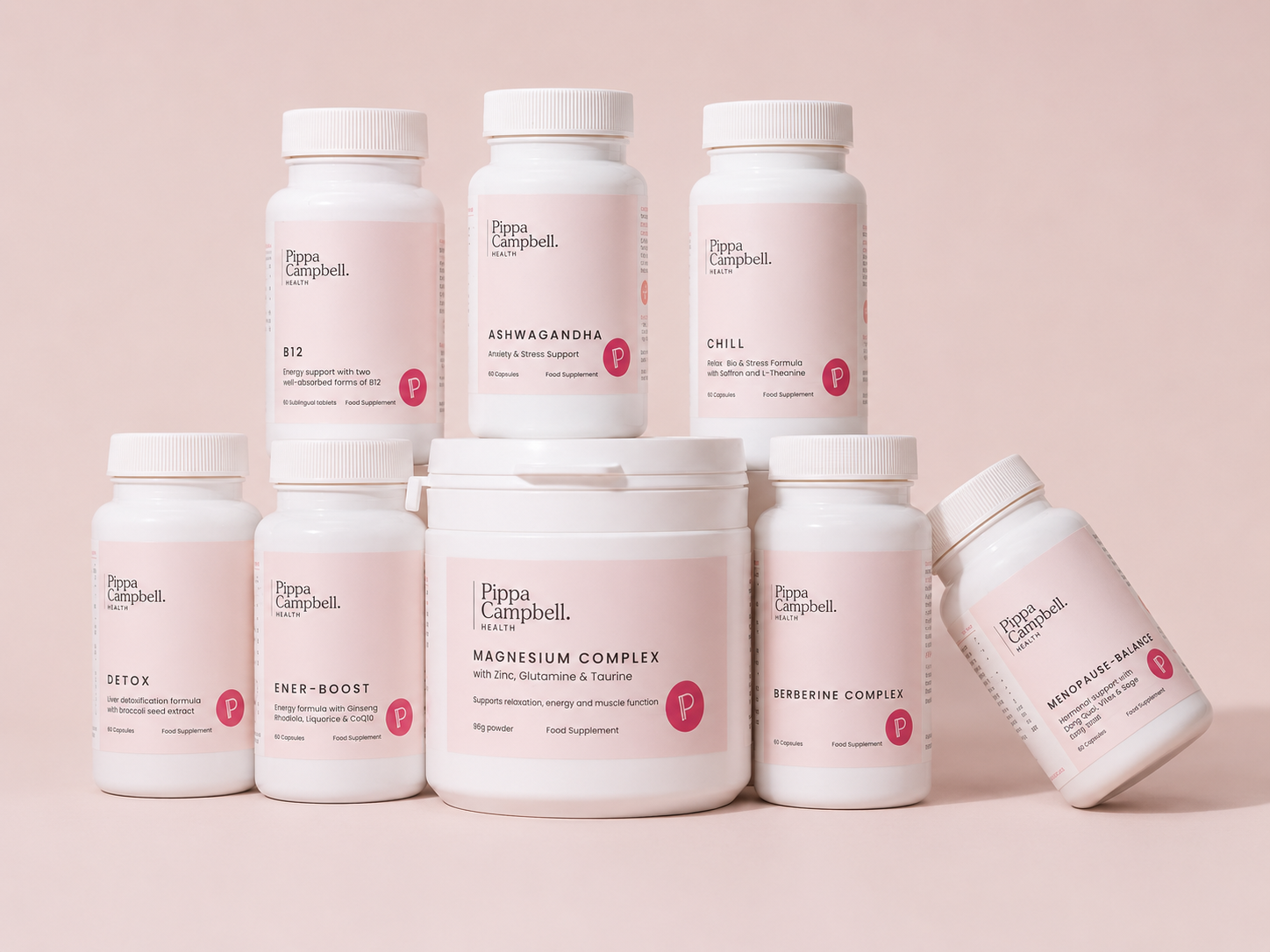
If you experience migraines at ovulation it may be due to high oestrogen causing oestrogen dominance. Reducing or helping to detox oestrogen often helps relieve migraines and treat the root cause while natural antihistamines may also help to reduce histamine caused by high oestrogen. Try my PCH Detox.
Sudden drops in both hormones just before or at the start of your period can also bring on headaches or migraines. Balancing hormones and supporting detoxification of them can often help.
Natural relief for hormonal migraines
-
Magnesium can reduce the frequency and severity of migraines. Magnesium also stabilises serotonin receptors, reduces inflammation, and prevents the release of the pain-promoting neurotransmitter. It goes very well with taurine, a calming amino acid that can also help to prevent migraines – both found in my PCH Magnesium Complex.
-
Bioidentical progesterone works best when taken during the two weeks leading up to the period and is available as a BIHRT compound or Utrogestan capsules. (Note: There’s no progesterone in any type of hormonal birth control because contraceptive drugs are progestins, which don’t have the same migraine-reducing effect.)
-
Vitamin B2 works by normalising the production of serotonin and improving the function of the MTHFR enzyme, which has been linked to migraines. Vitamin B12 may also help reduce severity if migraines. Try my B12 and B Complex.
-
5htp as found in my Mood & Sleep supplement to support serotonin. 5htp can help reduce sensitivity to pain.
-
A gluten-free diet was found in one study to eliminate migraines in 89 per cent of participants. A possible is mechanism is that gluten sensitivity can cause high glutamate by triggering an autoimmune reaction against the enzyme (glutamate decarboxylase) that converts glutamate to GABA.
All types of hormonal birth control can worsen migraines.