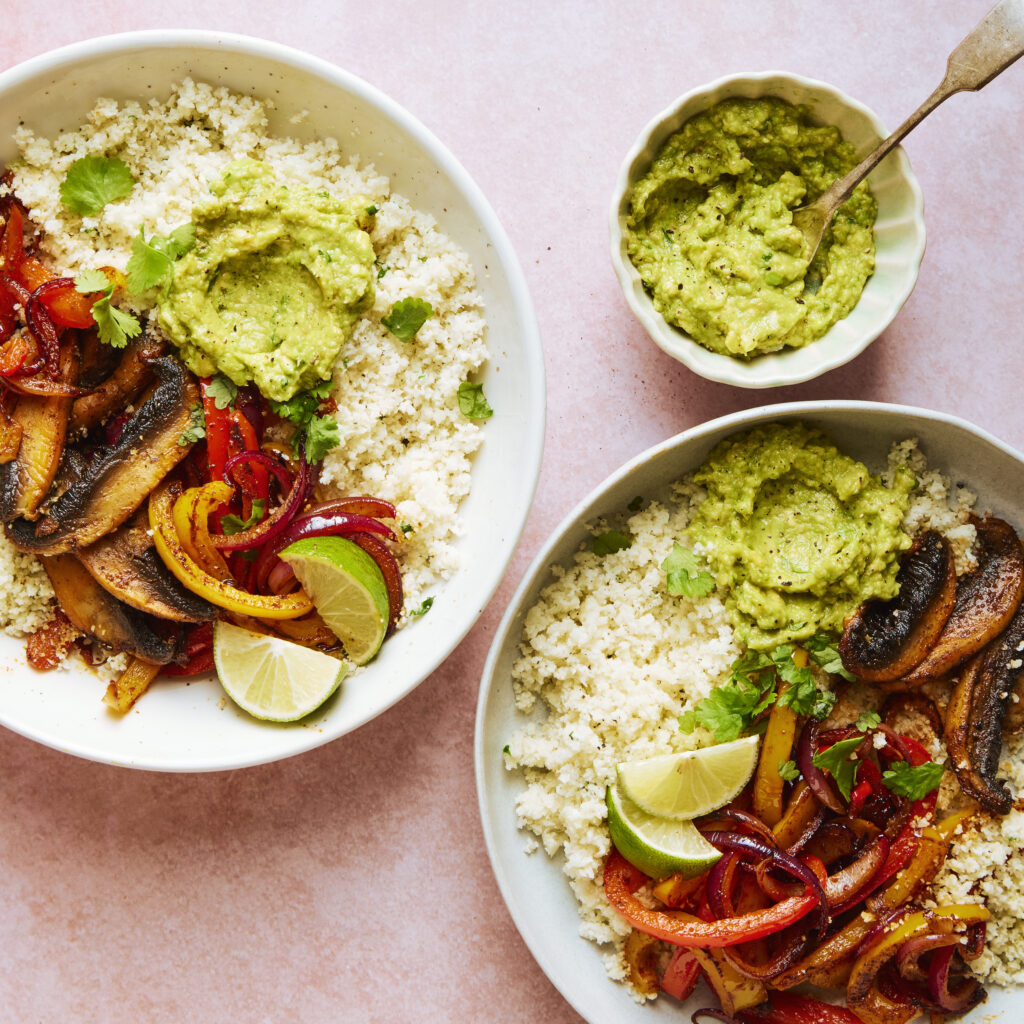
This tasty Fajita Bowls with Cauliflower Rice recipe is taken from my new book Eat Right, Balance Hormones which helps you uncover the root cause of hormonal imbalances and shows how you can adjust your diet in order to achieve a better balance.
Ingredients
Serves 4
- Medium Cauliflower (approx 750g)
- 2 tbsp Olive oil
- 1 Red pepper, sliced into 1cm slices
- 1 Yellow pepper, sliced into 1cm slices
- 1 Red onion, sliced into thin wedges
- 2 Large flat mushrooms, sliced into 1cm slices
- 1 Clove garlic, minced
- 1 tsp Smoked paprika
- ½ tsp Cayenne pepper
- ½ tsp Ground coriander
- ½ tsp Dried oregano
- Juice of 1 lime
Guacomole:
- 1 Large avocado
- 1 Clove garlic, minced
- Juice ½ Lime
- Flaked sea salt
- Small handful coriander leaves, finely chopped (optional)
Method
- Begin by preparing the cauliflower rice. Remove the tough stalk and break the remaining cauliflower into florets. Pulse in a food processor into a rice like consistency. Set aside.
- To make the guacamole, mash the avocado together with the garlic and lime juice then season with salt to taste.
- Heat 1 tbsp olive oil in a large frying pan over a medium heat and add the peppers to the pan. Fry for 5 minutes, tossing occasionally, until starting to soften.
- Add the onion, mushrooms, garlic, spices and lime juice and cook for a further 4-5 minutes until the vegetables are tender.
- Heat the remaining olive oil in a frying pan then tip in the cauliflower rice. Cook over a medium heat for 4-5 minutes, stirring regularly, until tender. Season with salt and pepper.
- Divide the cauliflower rice between 4 plates and top with the spicy vegetables and a spoonful of guacamole.
Rich in vitamin C, peppers are excellent for supporting immune function and skin health, both of which can be affected during perimenopause. Vitamin C is also crucial for collagen production, helping to maintain skin elasticity and strength, which is important as skin changes are common during this phase. Additionally, the capsaicin in peppers can improve metabolism and may aid in weight management, a concern for many during perimenopause. Garlic is renowned for its health-promoting properties, especially during perimenopause. It contains phytoestrogens, which can help in balancing the hormonal fluctuations typical of perimenopause. Garlic is also rich in antioxidants and has anti-inflammatory properties, supporting overall cardiovascular health. This is particularly important as the risk of heart disease tends to increase during and after perimenopause. Additionally, garlic’s beneficial effects on cholesterol levels and blood pressure are valuable for maintaining heart health during this time.