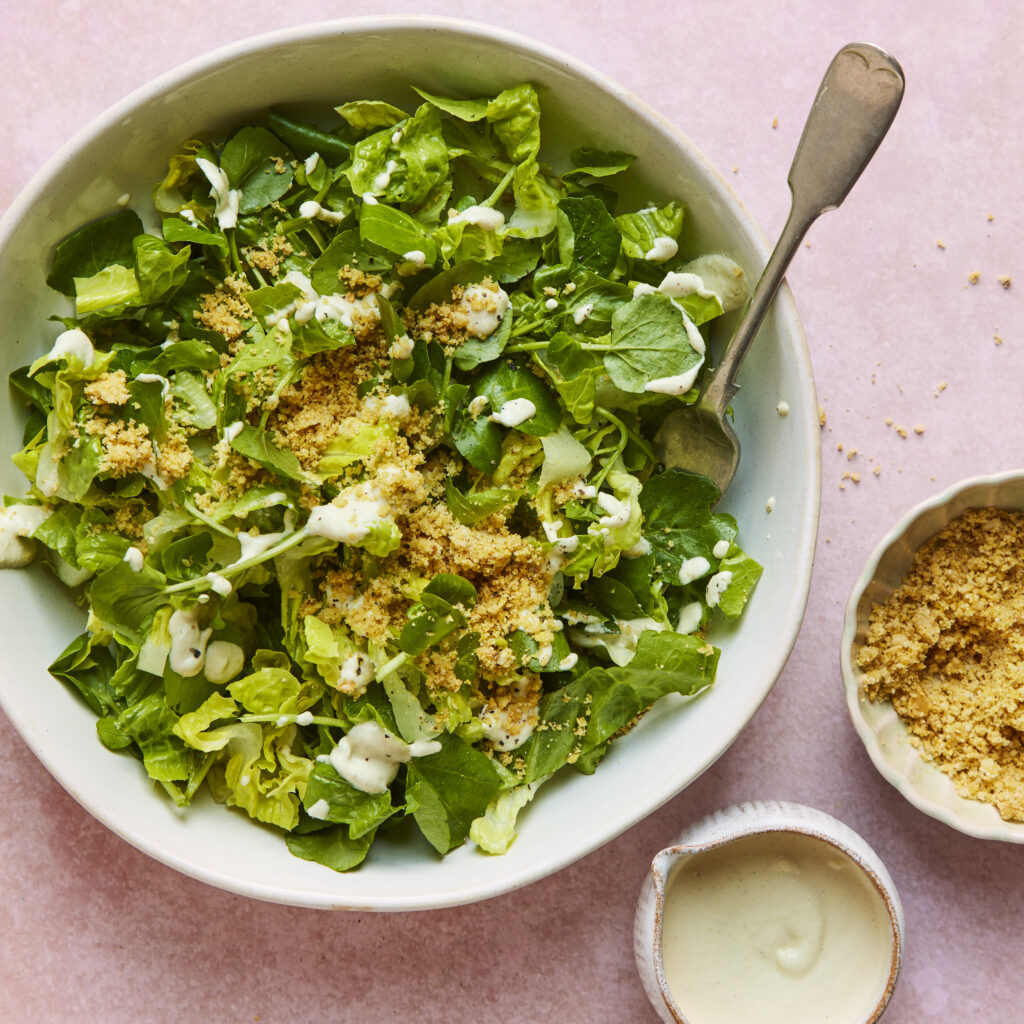
This easy Caesar Salad recipe is taken from my new book Eat Right, Balance Hormones which helps you uncover the root cause of hormonal imbalances and shows how you can adjust your diet in order to achieve a better balance.
Ingredients
Serves 2
- 1 Romaine lettuce, shredded
- 50g Watercress
Dressing:
- 65g Cashews, soaked for at least 3 hours
- 3 tbsp Water
- 1 Clove garlic, peeled
- Juice ½ lemon
- 1 tsp Dijon mustard
- 2 tsp Nutritional yeast
- 1 tsp Capers
- Salt and pepper
Brazil ‘nut’ parmesan
- 50g Brazil nuts, roughly chopped
- 10g Flax seeds
- 10g Nutritional yeast
- ½ tsp Garlic granules
- ½ tsp Flaked sea salt
Method
- To make the dressing, drain the cashews then tip into the bowl of a mini blender and blend with the rest of the ingredients until smooth. Add water as needed to achieve a creamy consistency then season to taste.
- Blend the brazil nuts, flax seeds, nutritional yeast, garlic granules and salt together in a spice or coffee grinder into a meal similar to the texture of grated parmesan.
- Toss the romaine lettuce and watercress together with a spoonful of dressing and divide between 2 serving plates. Drizzle over a little extra dressing and finish with a generous sprinkle of ‘parmesan’
Store any extra dressing and/or brazil nut ‘parmesan’ in air tight containers in the fridge for up to 1 week.
Romaine lettuce is a good source of fibre, which is beneficial for digestive health – an important factor in hormonal balance during perimenopause. It is also rich in vitamins A and C, both antioxidants that help in combating oxidative stress, a concern during hormonal changes. Additionally, romaine contains potassium, which is important for cardiovascular health, and folate, a B vitamin essential for overall well-being. Its hydrating and low-calorie nature makes it an excellent choice for maintaining a healthy diet and weight during perimenopause. Watercress is highly regarded for its dense nutrient content, particularly antioxidants like vitamin C, vitamin A, and phenolic compounds. These antioxidants play a crucial role in neutralising free radicals, thus protecting body cells from damage during the ageing process, which can be accelerated during perimenopause. Watercress is also a rich source of calcium, essential for bone health, a significant concern as the risk of osteoporosis increases during and after perimenopause. Furthermore, its high water content and low-calorie profile make it an excellent food for weight management, and its iodine content supports thyroid health, which can be affected during perimenopause.