If you are in perimenopause or menopause and you also have a thyroid condition, you have probably been given advice on both in entirely separate appointments, by entirely separate practitioners. One conversation about HRT. Another about your thyroid medication. Very little, if any, conversation about how the two interact.
This is a problem. Because oestrogen, progesterone and thyroid hormone are not independent systems. They influence each other constantly. And if you start or adjust HRT without understanding your thyroid status first, you may find that your symptoms do not improve in the way you hoped, or that new ones appear.
This is not a reason to avoid HRT. It is a reason to be better informed before you begin.
Why the thyroid and oestrogen are closely linked
The thyroid gland produces thyroid hormones that regulate metabolism, energy production, body temperature, heart rate and mood. These hormones need to be converted from their inactive form (T4) into their active form (T3) before the body can use them. This conversion process is sensitive to several factors, including oestrogen levels.
Oestrogen stimulates the production of a protein called thyroid-binding globulin (TBG). TBG binds to thyroid hormones in the bloodstream. When more TBG is present, more thyroid hormone becomes bound and therefore unavailable to the cells that need it. Free, unbound thyroid hormone is what matters clinically. Total thyroid hormone levels can look normal on a standard blood test while free thyroid hormone is actually low.
This means that when you introduce oestrogen through HRT, particularly oral oestrogen, you can inadvertently reduce the amount of active thyroid hormone your body has access to. If your thyroid function is already sluggish, this can tip you further into symptoms of low thyroid function.
The symptoms that overlap, and why this creates confusion
One of the clinical challenges here is that hypothyroid symptoms and perimenopause symptoms are almost identical. Both can cause:
- Fatigue that does not respond to rest
- Weight gain, particularly around the middle, that does not respond to dietary changes
- Brain fog, poor memory or difficulty thinking clearly
- Hair thinning, including thinning of the eyebrows
- Dry skin, brittle nails or cracked heels
- Low mood or depression
- Poor sleep quality or insomnia
- Cold intolerance
- Constipation and slowed digestion
- Irregular or heavy menstrual periods
- Low libido
- Muscle weakness or cramps
- Feeling easily startled or anxious
What I see most often in clinic is a woman in her mid-to-late forties who has been prescribed HRT for these symptoms but notices very little improvement. She is told her thyroid tests are normal. She continues to feel exhausted, gain weight and lose hair. The reason, in many cases, is that her thyroid function is suboptimal but not flagged because standard testing does not look deeply enough at the full thyroid picture.
What standard thyroid testing misses
A standard NHS thyroid test measures TSH (thyroid-stimulating hormone). TSH is a pituitary signal, not a direct measure of how much active thyroid hormone your cells are receiving. It is a useful starting point, but it tells an incomplete story.
To get a complete picture, we look at:
- TSH: the pituitary signal
- Free T4: the storage form of thyroid hormone
- Free T3: the active form that drives cellular function
- TPO antibodies and Thyroglobulin: to identify autoimmune thyroid activity, including early-stage Hashimoto’s, and to assess thyroid protein production
When we test, we stop guessing. A full thyroid panel gives you the clinical data you need to make a genuinely informed decision about HRT, and to understand whether any ongoing symptoms are thyroid-driven or hormone-driven.
How HRT can affect thyroid medication
If you are already taking levothyroxine (T4 replacement), starting oral HRT can increase your TBG levels and therefore reduce the amount of free T4 available for conversion to T3. This can mean your current dose of levothyroxine becomes effectively insufficient, even if the dose itself has not changed.
This is particularly relevant with oral oestrogen tablets. Transdermal oestrogen (patches, gels, sprays applied to the skin) bypasses the first pass through the liver, which is where TBG is produced. Research suggests that transdermal oestrogen has a significantly smaller effect on TBG levels and is generally considered the more appropriate route for women with thyroid conditions.
If you start HRT and notice a return or worsening of thyroid symptoms, it is worth discussing a reassessment of your thyroid levels with your practitioner. Your medication dose may need to be adjusted in response.
The role of Hashimoto’s thyroiditis
Hashimoto’s is an autoimmune condition in which the immune system attacks the thyroid gland. It is the most common cause of hypothyroidism in women and is significantly more prevalent in the perimenopause and menopause years. The hormonal fluctuations of this phase appear to influence immune regulation, which is why thyroid antibodies often rise at this stage.
Women with Hashimoto’s may experience a more variable response to HRT. Because the thyroid is already under immune attack, additional hormonal changes can trigger flares of fatigue, hair loss and mood disturbance. This does not necessarily mean HRT should be avoided, but it does mean that monitoring needs to be more careful and more regular.
Nutritional support for the immune and thyroid pathways is also highly relevant here, which I will come to shortly.
Nutritional support for thyroid function alongside HRT
Thyroid hormone production and conversion depend on a specific set of nutrients. When these are depleted, even an optimally prescribed HRT regimen may not deliver the energy, clarity and wellbeing you are expecting. These cofactors are often overlooked in a standard blood panel.
The key thyroid cofactors include:
- Iodine and selenium: both essential for the production and conversion of thyroid hormones. Selenium in particular is critical for the conversion of T4 to active T3, and for its antioxidant protection of thyroid tissue
- Zinc: supports TSH production and thyroid hormone synthesis, and is frequently depleted in women in perimenopause
- Iron: low ferritin impairs T4 to T3 conversion and is one of the most common reasons for persistent fatigue even when thyroid levels appear normal on standard testing
- B vitamins: particularly B12, which supports neurological function and energy production, both of which depend on adequate thyroid activity
- Vitamin D: low levels are strongly associated with autoimmune thyroid conditions including Hashimoto’s
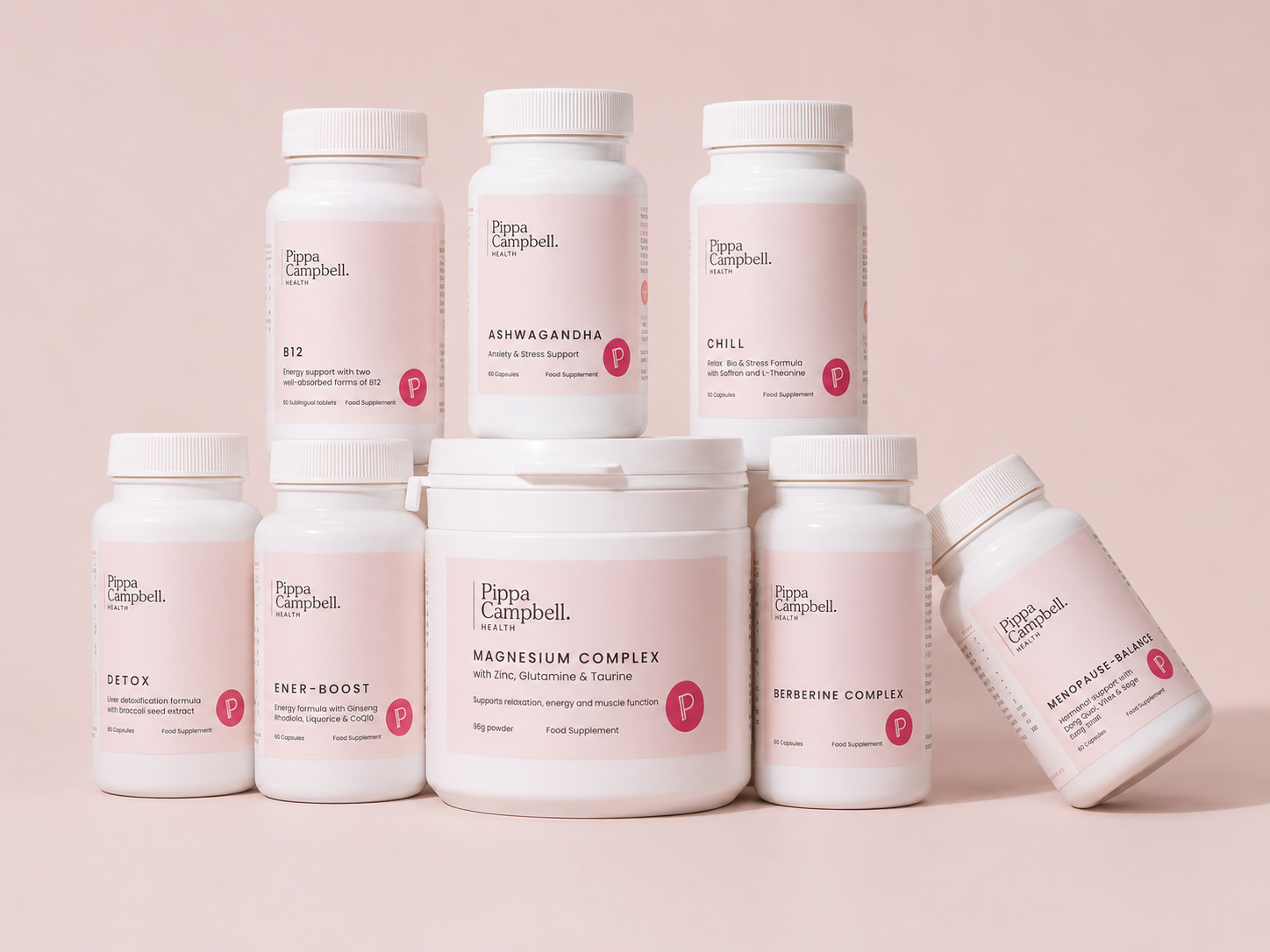
Within the PCH supplement range, two products are particularly relevant for women managing thyroid issues alongside HRT:
PCH Meta-Boost is formulated specifically to support thyroid and metabolic function. It contains iodine, which is essential for thyroid hormone production and particularly relevant for women with hypothyroid tendencies; selenium, which is critical for the conversion of T4 to active T3 and for reducing the inflammation that can drive autoimmune thyroid activity; zinc, which supports thyroid hormone synthesis and reduces the inflammatory load that impairs metabolic function; and vitamin B6, which plays a direct role in thyroid hormone production. In my experience, these are the cofactors that are most consistently depleted in women whose thyroid symptoms persist despite treatment. Meta-Boost addresses them all in a single, targeted formula.
PCH D3 Vegan Complex delivers vitamin D3 alongside vitamin K2 for optimal absorption and utilisation. The relationship between vitamin D deficiency and autoimmune thyroid conditions, including Hashimoto’s, is well established in the research. I recommend testing and optimising vitamin D levels as a priority for any woman with a thyroid condition, particularly those entering perimenopause or menopause when immune regulation becomes more vulnerable.
So, is HRT right for you if you have thyroid issues?
In most cases, yes. HRT can be appropriate and beneficial for women with thyroid conditions, provided that the right assessments are in place before you begin. The key considerations are:
- Complete a full thyroid panel, not just a TSH, before starting HRT
- Choose transdermal oestrogen rather than oral, to minimise the impact on TBG and free thyroid hormone levels
- If you are on levothyroxine, arrange a thyroid retest six to eight weeks after starting HRT and discuss any dose adjustment with your prescribing practitioner
- Address key nutritional cofactors to ensure your thyroid has the raw materials it needs to function optimally
- Monitor your symptoms carefully and communicate any changes promptly
Why conventional thyroid treatment often falls short
The standard medical treatment for hypothyroidism is levothyroxine, a synthetic form of T4. For some women, this is sufficient. But T4 is a storage hormone. It has to be converted into T3, the active form, before it can do anything useful in the body. If that conversion pathway is compromised, which it frequently is in women under chronic stress, with gut dysfunction, inflammation or nutrient deficiencies, then T4 medication alone will not resolve the symptoms.
This is why so many women on levothyroxine continue to feel exhausted, cold, unable to lose weight and cognitively sluggish. Their TSH may be within range. Their GP considers them treated. But their cells are not receiving adequate active thyroid hormone.
What we use in clinic: Whole Desiccated Thyroid
At Pippa Campbell Health, we work with Whole Desiccated Thyroid (WDT) for clients where synthetic T4 has not been effective. WDT is derived from the whole thyroid gland and contains the full spectrum of thyroid hormones, including T4, T3, T2 and T1. Because it provides T3 directly, it bypasses the conversion problem entirely. In my clinical experience, women who have struggled on levothyroxine for years often feel significantly better on WDT, with improvements in energy, weight, mood, hair quality and cognitive clarity.
WDT is not something a GP will typically offer or discuss. It requires a practitioner who understands the full thyroid picture, knows how to test for it properly and is experienced in prescribing and monitoring it. This is exactly what we do at PCH.
The problem with treating thyroid and hormones separately
What I see consistently is women who are receiving HRT from one practitioner and thyroid treatment, if they are receiving it at all, from another. Neither conversation includes the other. Nobody is looking at the full picture.
This matters because thyroid function and sex hormone balance are deeply interconnected. Oestrogen affects thyroid hormone availability. Progesterone supports T4 to T3 conversion. Cortisol, which rises under the chronic stress of midlife, directly suppresses thyroid function. Gut health determines how well thyroid hormones are absorbed and converted. None of these systems operates independently, and treating them as if they do is why so many women remain symptomatic despite being medicated.
At Pippa Campbell Health, we are thyroid specialists and hormone specialists. We look at these systems together because that is the only way to understand what is actually happening. When a woman in perimenopause comes to us with fatigue, weight gain, hair loss and brain fog, we do not simply assume it is perimenopause and prescribe HRT. We test the full thyroid panel, we assess her metabolic function, her cortisol patterns, her nutrient status. In my experience, what looks like perimenopause is frequently driven, at least in part, by suboptimal thyroid function that has gone unrecognised for years.
When we treat both, appropriately and simultaneously, the results are in a different category entirely.
Join me live: Hypothyroid and Hormones
On Tuesday 14th April at 7.30pm on Zoom, I am hosting a live Q&A with Lu and Kate on exactly this topic. If you suspect your thyroid may be part of your picture but have never had a satisfying answer, this session is for you.
Book your place here.
Want to know what your thyroid is really doing?
The PCH Thyroid At Home Test Package is a comprehensive at-home blood spot test covering TSH, Total T4, Free T4, Free T3, TPO antibodies and Thyroglobulin, with a 30-minute results consultation included. It is particularly relevant if you have been told your thyroid is normal but you do not feel well.
Find out more about the PCH At Home Thyroid Test Package here.
References: