Sleep, which should be the easiest thing in the world, suddenly feels impossible. Here is what is actually happening, and what to do about it.
You can make it through an entire day feeling functional. You handle the meetings, manage the household, hold everything together. Then you lie down, and everything changes.
The mind starts. A tight feeling settles in the chest. Thoughts that had nowhere to go all day suddenly rush in, and the idea of sleep feels completely out of reach. This is nocturnal anxiety, and what makes it so disorienting is that it seems to come from nowhere. You were fine. And now, at the one time of day your body is supposed to rest, you are not fine at all.
It does not come from nowhere. There is a reason why anxiety tends to intensify at night, and for women in perimenopause, that reason is almost always hormonal.
Why night is when it surfaces
During the day, the brain is occupied. There is always something else to focus on, a task to complete, a conversation to have, a problem to solve. That external noise suppresses the anxiety signal, even if the underlying stress is still there. At night, when the distractions fall away, there is nothing left to drown it out. Everything you have been holding at arm’s length rises to the surface.
Research by the Mental Health Foundation found that the average UK adult gets good quality sleep on just three nights a week, with one in three people saying that worry and stress is the direct cause. Yet most people are never given an explanation for why it happens at night specifically, or why it can feel so physical.
The hormonal picture
In clinic, we see many clients with nocturnal anxiety who are in perimenopause, and there are two hormonal drivers that come up most often.
Progesterone
Progesterone is the first hormone to decline during perimenopause. One of its most important functions is its calming, sedative effect on the brain. It works by supporting GABA, the brain’s primary inhibitory neurotransmitter, the chemical signal that tells your nervous system to quieten down. When progesterone falls, that natural calming signal weakens. Disturbed sleep, racing thoughts at night, and a feeling of being unable to switch off are often the first signs that progesterone is changing, even before periods become irregular.
If you want to support progesterone levels more directly, Peace Serum is worth exploring. It delivers bioidentical progesterone derived from a plant source through the skin, and is a good option for women who want targeted support without prescription HRT, or where some symptoms have not fully resolved alongside it.
Cortisol
Cortisol should follow a clear daily rhythm: high in the morning to help you wake, then falling steadily through the day so that melatonin, your sleep hormone, can rise in the evening. When this rhythm breaks down, cortisol stays elevated into the night instead of declining. This keeps the nervous system in a state of low-level alertness and suppresses melatonin production, making it difficult to fall asleep, stay asleep, or feel calm when you go to bed.
Cortisol dysregulation can also be triggered by what you eat and drink in the evening. A high-carbohydrate meal late at night or a few glasses of wine will cause a drop in blood sugar in the early hours of the morning. The body responds to that drop with a cortisol spike, which can wake you between 2am and 4am with a racing heart, a sense of dread, or an inability to fall back to sleep.
What nocturnal anxiety can feel like
It does not always look like visible panic. The experience varies from woman to woman, but the most common signs we hear described in clinic are:
- Lying awake with thoughts that feel impossible to slow down
- Waking between 2am and 4am unable to get back to sleep
- A tight chest or sense of physical tension before bed
- Intense dreams or recurring nightmares
- Restlessness and an inability to settle in the body
- A heightened alertness, as if waiting for something to go wrong
- Sweating at night even without high room temperature
- Waking feeling emotionally drained rather than rested
- Panic-like symptoms during the night that would not be present during the day
What actually helps
Because nocturnal anxiety in perimenopause is almost always rooted in hormonal change, the most effective approach addresses the underlying drivers rather than just the sleeplessness itself.
Support your cortisol rhythm through the day
Getting natural daylight into your eyes first thing in the morning is one of the most effective ways to anchor your cortisol rhythm. Light entering the eyes sets the internal clock and starts the cascade that allows melatonin to rise at the correct time in the evening. I recommend at least ten to thirty minutes outside as early as possible, even on overcast days.
Cut off screens before sleep
Blue light from screens actively slows melatonin production. I switch off my phone and computer at 8.30pm. If you are not ready for that, blue-light blocking glasses used in the evening can help. My favourite ones are from Bon Charge, which you can find on Pippa Loves. Keeping the lighting in your home low after dinner also sends a clear signal to the body that it is time to wind down.
Watch your evening food and drink
Even moderate alcohol use tends to reduce sleep quality and can trigger early-morning cortisol spikes. If you are waking between 2am and 4am, what you eat and drink in the evening is worth looking at closely. Including some slow-release carbohydrates with your evening meal, such as sweet potato or an apple with nut butter, can support sleep quality by helping the body produce serotonin, which is later converted to melatonin.
Use breathwork to calm the nervous system
Breathwork is one of the most direct ways to take the body out of a state of high alert. The technique I find most effective for night waking is the cyclic sigh: inhale slowly through the nose until the lungs feel full, take a second short inhale to expand them further, then exhale slowly and completely through the mouth. A few minutes of this, done lying in bed, sends a clear signal to the nervous system that you are safe. Research has shown this is more effective at reducing anxiety and improving mood than most other forms of breathwork.
Targeted supplement support
Food and lifestyle changes form the foundation, and for many women in perimenopause these adjustments alone make a difference. Where symptoms are persistent or have been building for some time, targeted supplements are often what finally shifts things. These are the ones we recommend in clinic for nocturnal anxiety and disrupted sleep.
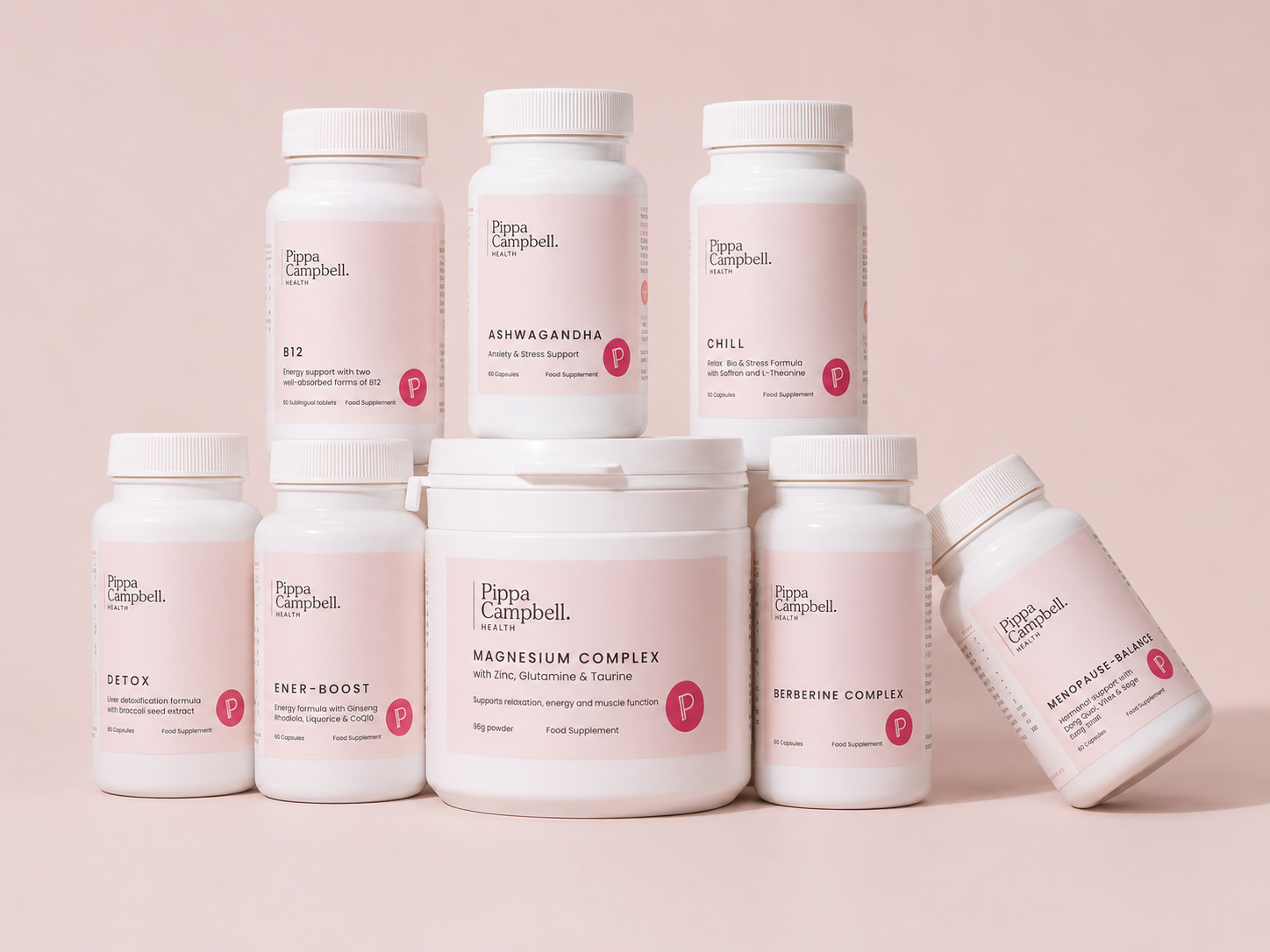
One of the most commonly depleted minerals in women over 40, and my starting point for poor sleep, night waking and physical tension that will not release. One scoop in water daily.
My first recommendation for nighttime anxiety. It contains L-theanine, which actually lowers cortisol when it spikes rather than just reducing the feeling of anxiety, alongside Safr’Inside, a patented saffron extract studied in clinical trials for cortisol and emotional balance. Safe to take alongside SSRIs and antidepressants.
Where the wired-at-night feeling is an established pattern rather than an occasional spike, Ashwagandha is the next step. I often recommend it alongside Chill: Chill handles the spike, Ashwagandha resets the pattern over time.
For waking between 2am and 4am with an inability to drop back off, or where low mood sits alongside the sleep disruption. Works on the serotonin-to-melatonin pathway directly. Not a sleeping tablet, and must not be taken alongside SSRIs or antidepressants.
When testing gives the clearest picture
If nocturnal anxiety is persistent, understanding whether the primary driver is cortisol dysregulation, low progesterone, or a serotonin deficit changes what you do about it. This is exactly what the DUTCH test is designed to reveal. It maps cortisol across the full 24-hour cycle, including the night, which gives a far more accurate picture than a single blood test taken in the morning.
Nocturnal anxiety is common in perimenopause, but it is not something you have to accept as an inevitable part of this stage of life. Your body is responding to hormonal changes, and when you understand what those changes are, you can do something specific about them.