I’ve been reading something recently that I think deserves more attention.
Dr. Jerilynn Prior is a Professor Emerita of Endocrinology at the University of British Columbia and a women’s health researcher with decades of clinical experience. She recently published a newsletter that stopped me in my tracks – not because it was controversial, but because it said something out loud that I think many women need to hear.
Menopause is not a disease.
That might sound simple. But given how the conversation around HRT has evolved in recent years, it is worth saying out loud. Every woman who lives long enough will go through menopause. It is a normal biological transition into a new phase of life. It does not, by itself, cause heart disease, osteoporosis or dementia. And it does not automatically require treatment.
What I see in clinic aligns closely with this. Women arrive having been told, or having read, that they need oestrogen to stay healthy, to protect their bones, to keep their brain functioning. Some of them have been prescribed high doses based on a lab number rather than their actual symptoms. A blood test does not tell us how a woman feels. Her experience does.
So when does menopause actually need treatment?
Dr. Prior is clear on this, and so am I. There are two reasons to consider hormone therapy.
The first is early menopause. If your periods stopped before the age of 40, and possibly before 45, your body has had too short a menstruating life. That does carry real long-term health risks, and hormone support is appropriate and well-evidenced in this situation.
The second is symptomatic menopause. Night sweats disturbing your sleep two or more nights a week. Hot flushes severe enough to cause real distress. Mid-sleep waking that leaves you exhausted and struggling to function day to day. These symptoms matter, and when they are left untreated they are associated with increased cardiovascular and fracture risk. If this is your experience, exploring your options is the right thing to do.
But if you are post-menopausal and not experiencing these symptoms? You do not automatically need hormones.
Something that doesn’t get discussed enough
Dr. Prior also highlights oral micronised progesterone as an option for night sweats and sleep disruption that is often overlooked in favour of oestrogen. It does not carry the same risks as synthetic progestins or high-dose oestrogen, and it is much more straightforward to stop when the time comes. If sleep disruption is your primary concern, this is worth raising with your GP or specialist.
What I would add from clinic
The women I work with are often living with real confusion. They have read conflicting things, been dismissed by their GP, or been handed a prescription without a proper explanation of what is driving their symptoms. What I find, so often, in clinic is that understanding what is actually happening hormonally makes all the difference.
This is why testing matters so much. The DUTCH hormone test gives a complete picture of how your hormones are functioning and how your body is metabolising them. It takes the guesswork away and means any decisions about hormone support are based on what your body is actually doing, not a generalised assumption about what menopause means.
For women in perimenopause who are experiencing disrupted sleep, mood changes, hot flushes and fatigue but who are not yet at the point of hormone therapy, Peri-Balance is the first supplement I recommend. What makes it different from the other perimenopause products on the market is the adrenal support it contains. As the ovaries begin to reduce hormone output, the adrenals are supposed to step in. When they are depleted by stress, which most women at this life stage are dealing with, symptoms worsen considerably. It can also be taken alongside HRT for residual symptoms.
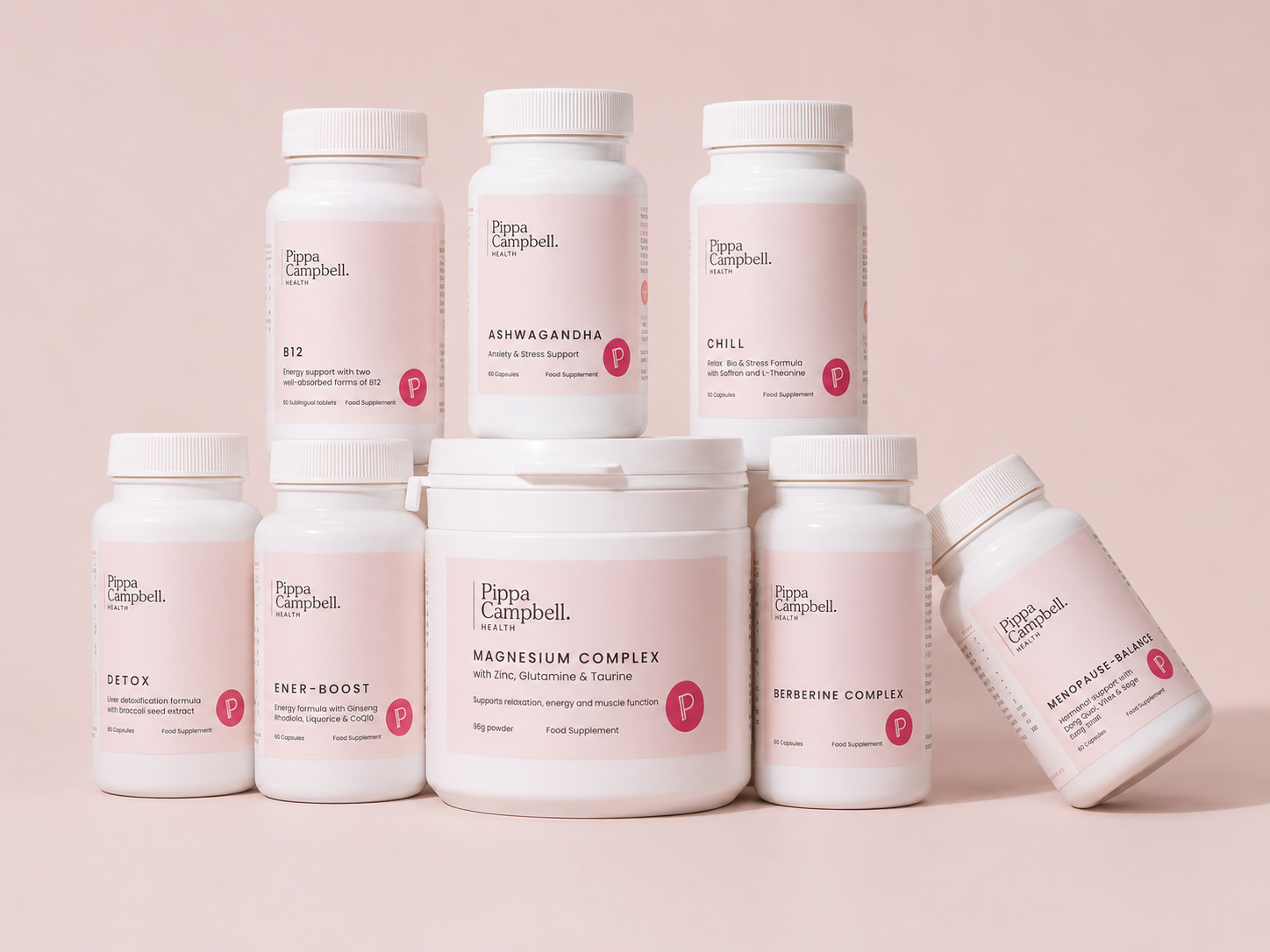
For women who are post-menopausal, 12 months or more without a period, the body’s needs are different. Menopause Balance is formulated for this stage, with nine botanicals including sage and hops for temperature regulation, ashwagandha for cortisol and sleep, and broccoli powder to support the liver pathways that clear used oestrogen. It is not a perimenopause product and the two should not be used at the same time.
Menopause is a transition. For some women it is smooth. For others it is really difficult. Both are real, and both deserve a considered, individual response.
If you are unsure where you stand, a 15 minute discovery consultation with one of our practitioners is a good place to start.
With thanks to Dr. Jerilynn Prior, Professor Emerita of Endocrinology at the University of British Columbia, whose December 2025 newsletter informed the clinical context in this post.
Reference
Hitchcock CL, Prior JC. Oral micronized progesterone for vasomotor symptoms – a placebo-controlled randomised trial in healthy postmenopausal women. Menopause: The Journal of The North American Menopause Society. 2012;19(8):886-893. DOI: 10.1097/gme.0b013e318247f07a