Flaxseeds are one of the most popular foods for promoting hormone balance, especially oestrogen balance. Flaxseeds contain a large variety of nutrients and are very high in fibre and omega 3. They are also well known for their phytoestrogen content which helps to support balance oestrogen levels.
5 Reasons Why Flaxseeds Are Good For Hormone Balance
1) Fibre: Flaxseeds are incredibly high in fibre. Just one tablespoon of ground flaxseeds contains approximately 2g of fibre. Flaxseeds contain both soluble and insoluble fibre and together these fibres help to prevent terrible diseases by lowering cholesterol and stopping type 2 diabetes as well as helping keep bowel movements regular. Fibre is also really important for women of reproductive age for clearing out excess or unwanted oestrogens from the gut. The large intestine houses the estrobolome, which is a collection of bacteria in the gut capable of metabolising and modulating the body’s circulating oestrogen. It is the bacteria in the gut, and the estrobolome, that affects oestrogen levels, which in turn can impact weight, libido and mood. Fibre helps keep the estrobolome balanced and ensures that more oestrogen is removed rather than being reabsorbed.
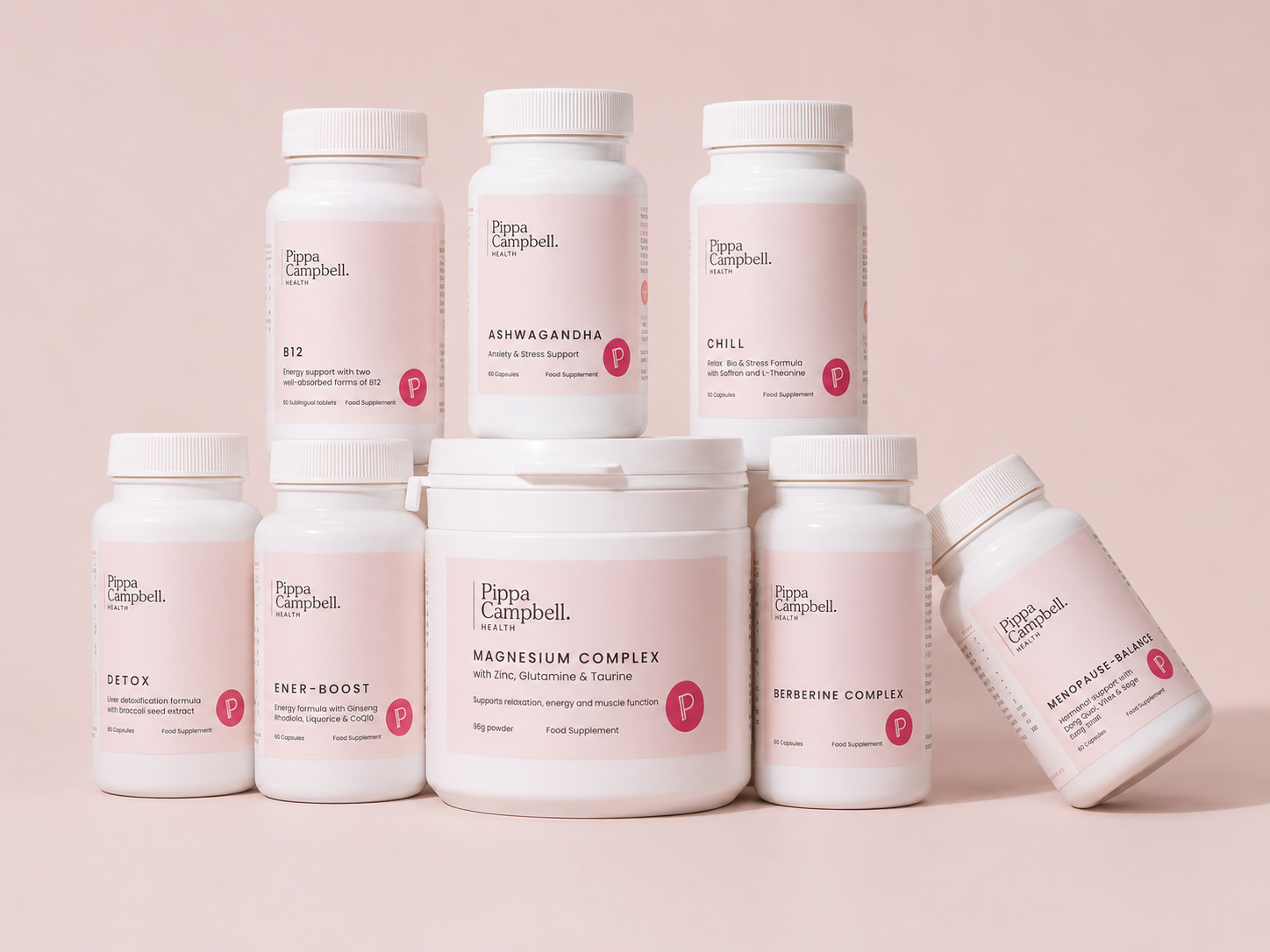
Oestrogen clearance works in two stages: the liver processes used oestrogen first, then fibre in the gut binds it and carries it out. Without enough fibre, that oestrogen can be reabsorbed rather than cleared. This is the exact principle behind Fibre Complex, which combines flaxseed powder with psyllium husk, sugar beet fibre and konjac fibre to support the gut stage of clearance, alongside Detox, which supports the liver stage. Together they cover both parts of the pathway.
2) Phytoestrogens: Flaxseeds are really high in phytoestrogens called ‘lignans.’ Phytoestrogens are plant based compounds that imitate oestrogen in the body. They are not real oestrogen and can be massively weaker than our bodies’ own natural oestrogen. They’re called phytoestrogens because they interact with oestrogen receptors but they’re not oestrogen. For women of reproductive age, phytoestrogens have a beneficial anti-oestrogen effect and help to promote the healthy metabolism or detoxification of oestrogen. Food-based phytoestrogens may even reduce the risk of some hormone-sensitive cancers.
https://pubmed.ncbi.nlm.nih.gov/27723080/
Studies have shown that phytoestrogens have both oestrogenic and antioestrogenic effects. They work at the receptor level by weakly binding.
This is the most fascinating chemical phenomena about lignans, that it can act as weak oestrogen agonists (promoter), partial agonists, or as antagonists (blocker) to endogenous oestrogens (internally produced) and xenoestrogens which are synthetic oestrogens found in much commercial skincare, cosmetic and cleaning products.
In short, flaxseed is an oestrogen adaptogen; it can act as an oestrogen amplifier or oestrogen blocker depending on what the body needs. How clever!
Studies –
Reduction of fibroids in young women
Flaxseeds and breast cancer benefits
Flaxseed alleviates PMS
Flaxseed improves fertility
Reduction on hot flashes and vaginal dryness
Improved blood cholesterol
3) Blood Sugar Balance: Unstable blood sugar can be a root cause of hormonal imbalances. It is most commonly seen in women with PCOS or in perimenopause but it also makes PMS symptoms worse as blood sugar becomes less stable in the luteal phase. Research shows that flaxseed consumption can help decrease blood sugar levels and decrease insulin resistance. This is likely due to the soluble fibre which has profound action on blood sugar. As insulin resistance is one of the main reasons behind weight gain, flaxseeds have also been shown to be beneficial in aiding weight loss. The soluble fibre in flaxseeds also increases feelings of satiety or fullness which leads to less overeating and greater weight loss.
For women whose blood sugar swings are more stubborn than diet alone can shift, Berberine Complex targets the same pathway from a different angle. It activates AMPK, the same metabolic pathway activated by metformin, alongside resveratrol for antioxidant support and cinnamon, which has a long clinical history for supporting blood sugar balance.
4) Omega 3: Flaxseeds are a rich source of alpha-linolenic acid (ALA), an omega-3 fatty acid essential for health. ALA is then converted into EPA and DHA in the body. All of these omega types are important but ALA is particularly significant for its anti-inflammatory properties. This makes flaxseeds helpful in supporting inflammatory hormonal conditions such as endometriosis and fibroids, and omega 3 has been found to help lessen period pain.
While flaxseeds provide ALA, the body must convert this into EPA and DHA, which are the forms of omega-3 most active in supporting inflammation balance and hormone health. For this reason, alongside including foods such as flaxseeds, I often recommend ensuring adequate intake of EPA and DHA through oily fish two to three times a week.
5) Tryptophan: Flaxseeds contain high levels of an amino acid called tryptophan. The body uses tryptophan to help make melatonin and serotonin. Serotonin is our happiness neurotransmitter that converts to melatonin at night to help with sleep. Flaxseeds contain lots of tryptophan, magnesium and omega 3 which help control serotonin. Flaxseeds are great to eat for both serotonin and oestrogen balance and help to support good moods and fight depression and anxiety.
Tasty Ways to Eat Flaxseeds
Many supermarkets and health food stores sell flaxseeds whole or ground. Whole flaxseeds can be ground easily at home using a food processor. It is recommended that you use ground flaxseeds because they are actually far easier to digest. Aim to include 1-2 tablespoons of flaxseeds in your diet every day to reap the maximum benefits.
Easy ways to include flaxseeds in your diet:
-
Add a tbsp of ground flaxseed to porridge or one of my grain-free granola recipes.
-
Add a tbsp of ground flaxseeds to a smoothie or protein shake
-
Use a tbsp of ground toasted flaxseeds as a crunchy topping to yoghurt, salads and soups
-
Use ground flaxseed when baking cookies, pancakes, muffins, breads and other baked goods
Try my Flaxseed Porridge with Apple and Coconut from my book Eat Right, Balance Hormones.