Seed cycling is a growing trend claimed to balance hormones, boost fertility and ease symptoms of menopause.
It involves eating flaxseeds, pumpkin seeds, sesame seeds and sunflower seeds at different times of the month to support certain hormones. The idea is that different seeds can promote or inhibit the activity of oestrogen and progesterone.
I’ve used seed cycling with clients as part of a programme to balance hormones and I do believe there are benefits. I’ve also written about it in both my books, Eat Right, Lose Weight and Eat Right, Balance Hormones.
What is seed cycling?
Seed cycling is a naturopathic approach that is claimed to balance hormones by supporting oestrogen during the first half of your menstrual cycle and progesterone during the second half.
Its proposed benefits include helping to regulate periods, reduce acne, support women with PCOS (PMOS) and endometriosis, and ease menopausal symptoms such as hot flushes, night sweats, fatigue and mood swings.
The most common method involves eating 1 tablespoon each of freshly ground flaxseeds and pumpkin seeds daily for the first 13–14 days of your menstrual cycle, known as the follicular phase.
During the second half of your cycle, known as the luteal phase, you switch to 1 tablespoon each of ground sunflower seeds and sesame seeds daily, continuing until the first day of your next period.
For women without a regular menstrual cycle, including menopausal and postmenopausal women, the phases of the moon are often used as a guide, with day one falling on the new moon.
How do the four seeds support your hormones?
The idea behind seed cycling is that each seed provides different nutrients and plant compounds that may influence hormone activity during the menstrual cycle.
Follicular phase: Flaxseeds and pumpkin seeds
Flaxseeds are rich in phytoestrogens, plant compounds that can mimic the action of oestrogen. They contain lignans, which may influence oestrogen activity in the body, and are also a good source of fibre.
Fibre is important for digestive health and regular bowel movements, helping the body eliminate waste products, including metabolised hormones.
If you’re struggling to get enough fibre through your diet, my By Pippa Campbell Fibre Complex combines psyllium husk, flaxseed, sugar beet fibre and konjac to help increase your daily fibre intake.
Pumpkin seeds contain zinc, which is involved in normal fertility and reproduction, as well as magnesium. Zinc is thought to support progesterone production in preparation for the next phase of the menstrual cycle.
Luteal phase: Sesame seeds and sunflower seeds
Sesame seeds contain lignans, a type of polyphenol, which are thought to help prevent oestrogen levels from increasing too much during the second half of the menstrual cycle.
Sunflower seeds are rich in vitamin E, which is believed to support progesterone during the luteal phase. They also provide healthy fats and other important nutrients.
Proponents of seed cycling suggest that positive hormonal changes may become noticeable after several months of following the routine.
I have used seed cycling with clients as part of a programme to balance hormones and I do believe there are benefits. However, I don’t think this method should be relied upon alone. It should always form part of an overall programme, although it’s something women can try at home.
Can seed cycling help with irregular periods?
Missing or irregular periods can be frustrating and can disrupt your daily life. Whether you’re concerned about an unexpected beach day or dealing with inconsistent spotting, it can be a major source of stress.
Studies have suggested that around 14% of women experience irregular or absent periods, known as amenorrhoea, during their reproductive years. (1,2)
Why is your period irregular?
The short answer is hormones. Hormonal imbalances can develop for several reasons, and understanding what’s affecting your cycle is important.
For some women, the thyroid may not be functioning properly, leading to disruptions in the menstrual cycle. Another potential cause is polycystic ovary syndrome, or PCOS (PMOS), a condition associated with irregular periods, weight gain, acne and excess hair growth. (3)
Lifestyle factors, including high stress levels and excessive exercise, can also affect menstrual regularity. (4)
There are steps you can take to help bring your cycle back into balance, including prioritising nutrient-rich foods, getting sufficient sleep and reducing stress. Seed cycling is another approach that can be included as part of a comprehensive healthy eating programme.
PCOS (PMOS) and seed cycling
PCOS (PMOS) is a complex hormonal and metabolic condition that can affect ovulation, menstrual regularity, insulin regulation and reproductive health.
The term PMOS, or polyendocrine metabolic ovarian syndrome, has been proposed to reflect the wider hormonal and metabolic nature of the condition, rather than focusing solely on ovarian cysts.
What does the research say?
Research has explored the effects of seed cycling alongside a portion-controlled diet in women with PCOS (PMOS).
A study published in Food Science & Nutrition in 2023 investigated a programme involving pumpkin, sunflower, sesame and flaxseeds alongside dietary changes.
The research described women aged between 15 and 40 who were divided into groups receiving different interventions, including metformin with a portion-controlled diet and seed cycling with a portion-controlled diet.
Over a 90-day period, researchers reported improvements in the seed cycling group, including:
- Reduction in luteinising hormone (LH): Reported decreases of approximately 1.5–2%.
- Reduction in follicle-stimulating hormone (FSH): Reported decreases of approximately 1.2–2.5%.
- Weight loss: Participants experienced reductions in body weight.
- Reduction in ovarian cysts: Ultrasound evaluations indicated improvements in ovarian findings.
The researchers concluded that seed cycling, alongside dietary changes, may help improve hormonal disturbances in women with PCOS (PMOS).
These findings are promising, although research into seed cycling is still in its early stages and further studies are needed. The seeds themselves are nutritious foods, providing fibre, healthy fats, vitamins and minerals that can be beneficial as part of a healthy diet.
You can also read my blog on the four types of PCOS (PMOS) for more information about the different hormonal and metabolic factors involved.
How to start seed cycling if your period is absent
If you’re not currently having periods, you can begin seed cycling by following the lunar cycle.
Start with the follicular phase blend of pumpkin seeds and flaxseeds on day one of the new moon. On day 15, switch to the luteal phase blend of sunflower seeds and sesame seeds, continuing until day 28.
This provides a routine to follow when you don’t have a regular menstrual cycle to guide you.
Why use the new moon?
Both the lunar cycle and a typical menstrual cycle last approximately 28–30 days.
Historically, women’s ovulation may have coincided with the full moon, providing more light during their fertile phase. (5) Some studies have suggested that women’s menstrual cycles were linked to the new moon, and researchers have investigated possible connections between fertility and lunar phases. (6)
Research has also explored whether artificial light may have influenced this relationship, although findings about the connection between lunar and menstrual cycles have been mixed. (7)
As seed cycling is intended to support the body’s natural hormonal rhythm, following the lunar phases can provide a useful guide when periods are absent or irregular.
Making seed cycling simple
The best way to get the most out of seed cycling is to use freshly ground seeds, particularly flaxseeds, as grinding makes their nutrients more accessible.
You can prepare small batches in advance and keep them in an airtight container in the fridge, making it easier to include your daily seeds without having to grind them every morning.
I like adding ground seeds to my breakfast protein shake, but you can also stir them into Greek yoghurt or porridge, sprinkle them over salads and roasted vegetables, or add them to homemade pesto and soups.
If you’re looking for another breakfast idea, try my Flaxseed Porridge with Apple and Coconut, a lovely way to include flaxseeds in your morning routine.
Magnesium and hormone health
The four seeds also provide important nutrients such as magnesium and zinc, which have several roles in women’s health.
Magnesium supports normal nervous system function, psychological function and the reduction of tiredness and fatigue, while zinc contributes to normal fertility and reproduction.
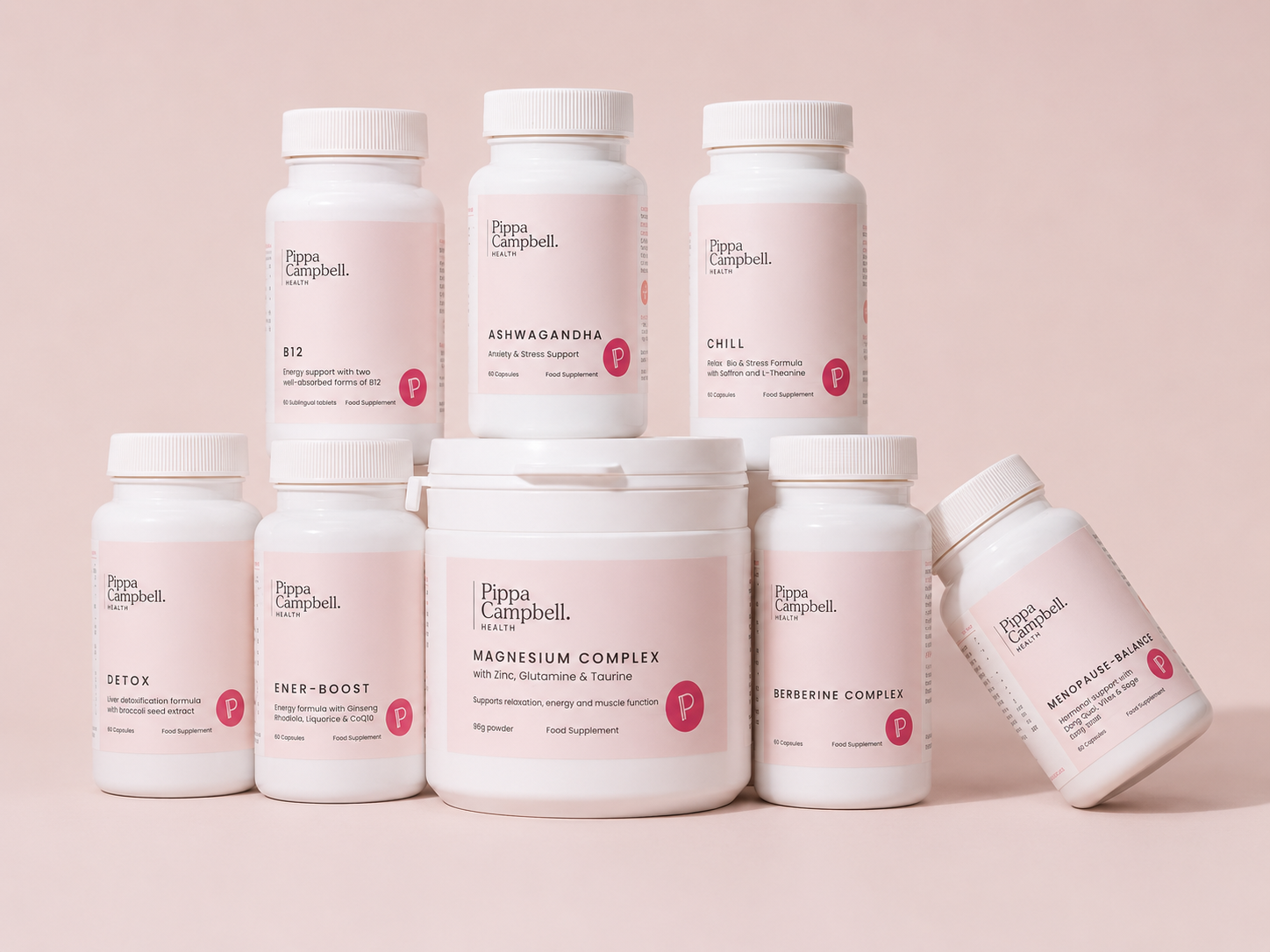
I also recommend my By Pippa Campbell Magnesium Complex, which combines three forms of magnesium with zinc, taurine and glutamine.
My thoughts on seed cycling
I’ve used seed cycling with clients as part of a programme to balance hormones, and I do believe there are benefits. However, I wouldn’t recommend relying on seed cycling alone, particularly if you’re experiencing persistent symptoms or your periods have stopped.
It should always be part of a wider approach that considers your nutrition, stress levels, sleep and overall hormone health.
Reducing stress through meditation, eating a nutrient-dense diet and getting quality sleep are all ways to support hormonal balance alongside seed cycling.
Every woman’s body is different, and the key is understanding what your hormones specifically need.
Take my free Metabolic Type Quiz to discover which of the seven metabolic types you are and learn more about what your hormones and metabolism need to feel balanced and energised.
TAKE THE FREE METABOLIC TYPE QUIZ
You can also find more advice on balancing your hormones and managing symptoms of hormonal imbalance in my book, Eat Right, Balance Hormones.
References
- American Family Physician (2012). Amenorrhea: An Approach to Diagnosis and Management. Read article
- Original research reference: PubMed PMID 30889222
- National Institutes of Health. About Polycystic Ovary Syndrome (PCOS)
- Healthline. Reasons You Might Miss a Period
- Menstrual Cycles Intermittently Sync with Moon Cycles: Study
- Healthline. Connection Between Your Menstrual Cycle and the Moon
- Helfrich-Förster et al. (2021). Women temporarily synchronize their menstrual cycles with the luminance and gravimetric cycles of the Moon. Read research
Additional seed cycling research
Rasheed et al. (2023). Effectiveness of combined seeds (pumpkin, sunflower, sesame, flaxseed): As adjacent therapy to treat polycystic ovary syndrome in females. Read full study