Oestrogen dominance is one of the most common hormonal imbalances I see in clinic, and one of the most frequently missed drivers of the symptoms women in their late 30s and 40s are told are simply part of getting older.
It does not necessarily mean your oestrogen is abnormally high. It means the balance between oestrogen and progesterone is disrupted, specifically that progesterone is too low relative to oestrogen. This is extremely common in perimenopause, when progesterone often begins to decline before oestrogen does, creating a state of relative oestrogen excess even when individual hormone levels appear within range on a standard blood test.
But there is more than one reason this imbalance can happen. You may be producing more oestrogen, struggling to clear used oestrogen effectively, not producing enough progesterone, or metabolising progesterone more quickly. Understanding which of these is happening is important because they don’t all need the same approach.
According to the work of Dr John R. Lee, who first brought oestrogen dominance to mainstream attention, around 75% of women experience symptoms of oestrogen dominance, yet the vast majority do not realise it is what is driving how they feel.
If you have been struggling with symptoms your GP cannot explain, or your bloods have come back normal but you know something is not right, this may be what is happening in your body.
The symptoms of oestrogen dominance
At Pippa Campbell Health, we see these symptoms in clinic every day. They may be common, but they are not normal, and they are not something you have to accept.
Oestrogen dominance rarely produces just one symptom in isolation. We would be looking for several of the following:
- Bloating and fluid retention
- Breast tenderness, lumpiness or fibrocystic changes
- Heavy, painful or irregular periods
- PMS and pronounced mood changes in the week before your period
- Hormonal headaches or migraines
- Hormonal acne
- Poor sleep and anxiety
- Strong sugar and carbohydrate cravings
- Stubborn fat on the hips, thighs and bottom
- Cellulite
- Fibroids, cysts or uterine polyps
- Endometriosis/Adenomyosis
- Thyroid nodules
- Itchy skin, hives or worsened hay fever, and reactions to wine or champagne (these histamine-type symptoms can be driven by high oestrogen and are often missed)
- Fertility difficulties or lack of ovulation
The presence of several of these together, particularly in a woman in her late 30s or 40s, is a clear signal that the hormonal picture needs to be properly investigated.
It is also worth noting that oestrogen dominance is not exclusive to perimenopause.
It is one of the most common reasons we see younger women in their teens and 20s in clinic, presenting with PMS, acne, heavy periods and hormonal migraines. And post-menopause, even when oestrogen levels are low overall, poor clearance through the liver and gut means used oestrogen can still recirculate and cause dominance symptoms. The absolute level of oestrogen matters less than how well your body is processing and eliminating it.
Why oestrogen dominance produces so many different symptoms
Oestrogen dominance affects so many different body systems that the symptom list can feel overwhelming. Understanding the mechanisms behind it explains why one hormonal imbalance can produce such a wide range of complaints.
Mood, anxiety and sleep
Oestrogen and progesterone both have a direct effect on brain chemistry. Oestrogen influences serotonin, dopamine and norepinephrine, all of which regulate mood. When oestrogen is relatively high and progesterone too low, this can produce irritability, rage, anxiety, low mood and the kind of sleep disruption that leaves women exhausted but wired. Progesterone in particular increases the brain’s sensitivity to GABA, the calming neurotransmitter. When progesterone declines, that calming effect is lost.
Appetite, cravings and weight
There is a persistent assumption that progesterone is responsible for the increased hunger and carbohydrate cravings that many women experience, particularly in the second half of their cycle. The clinical evidence increasingly challenges this. Research points to oestrogen, and specifically elevated oestrogen relative to progesterone, as a significant driver of cravings for sugar and carbohydrate-rich foods, operating through its interaction with leptin, the body’s primary satiety hormone. Oestrogen dominance is also associated with impaired insulin sensitivity, which makes blood sugar regulation less stable, and with fat storage particularly around the hips and thighs. Fat tissue itself produces oestrogen, which means carrying excess weight can deepen the hormonal imbalance further.
Fluid retention and bloating
Oestrogen promotes sodium and water retention. Progesterone naturally counteracts this by opposing aldosterone, the hormone that tells your kidneys to hold onto sodium. When progesterone is too low relative to oestrogen, this counterbalancing effect is reduced and fluid retention increases. This is why bloating is one of the hallmark symptoms of oestrogen dominance, and why some women notice significant changes in how they feel across their cycle that have nothing to do with body fat.
Heavy periods, fibroids and endometriosis
Oestrogen is a pro-growth hormone. One of its jobs is to build the womb lining each month. When oestrogen is dominant and progesterone cannot adequately counterbalance it, the lining can become thicker than it should, leading to heavier, more painful periods. Over time, oestrogen dominance can also stimulate unwanted growth in other areas, contributing to fibroids, ovarian cysts and endometriosis.
Histamine symptoms
High oestrogen stimulates the release of histamine, and histamine in turn stimulates further oestrogen production. This creates a cycle that can produce symptoms including itchy skin, hives, worsened hay fever and reactions to foods and drinks high in histamine such as wine and champagne. Antihistamines typically do not resolve these symptoms because they do not address the underlying hormonal driver.
Thyroid and metabolism
High oestrogen levels can reduce the amount of thyroid hormones that are able to get into cells to do their work. Since thyroid function drives the speed of your metabolism, this is one route through which oestrogen dominance can contribute to fatigue and metabolic sluggishness that feels completely unresponsive to lifestyle changes.
What causes oestrogen dominance
Oestrogen dominance can develop through four main routes, and in many women I see in clinic, more than one is present at the same time.
- Too much oestrogen
This can come from eating non-organic food that contains pesticides, fertilisers and growth hormones. It can also come from excess exposure to environmental xenoestrogens, chemical compounds found in plastics, detergents, skincare products and other everyday items that mimic oestrogen in the body. Synthetic oestrogens from hormonal contraceptives and some forms of HRT are another source, as is chronic stress, which strains the adrenals and shifts the body towards producing more oestrogen relative to progesterone.
Fat tissue is another source of oestrogen because it contains aromatase, the enzyme that converts androgens into oestrogen. This becomes particularly relevant after menopause, when the ovaries are producing much less oestrogen and peripheral tissues become a more important source.
- Too little progesterone
In perimenopause, progesterone is typically the first hormone to decline significantly. This creates a state of relative oestrogen dominance even when oestrogen levels themselves are normal or fluctuating.
Progesterone production also depends on ovulation. After you ovulate, the follicle that released the egg becomes the corpus luteum, which produces progesterone during the second half of your cycle. If you are not ovulating regularly, or ovulation becomes less consistent as it often does during perimenopause, progesterone production falls.
Chronic stress can affect progesterone too. You may have heard me talk about the “Progesterone Steal”. Cortisol and progesterone are both made from the precursor hormone pregnenolone. There isn’t actually any stealing going on, but when you’re under prolonged stress, your body prioritises its stress response. This can affect ovulation and progesterone production, leaving you with less progesterone to balance the effects of oestrogen.
Thyroid function is important too. Low thyroid function can interfere with reproductive function and ovulation, so I would never look at progesterone on its own.
- Poor oestrogen clearance
Your body clears used oestrogen through the liver and gut. If either of these pathways is sluggish, oestrogen recirculates rather than being excreted, which amplifies the effects of oestrogen dominance significantly. The liver breaks down oestradiol and oestrone through three distinct pathways. The 2-OH pathway is the protective route. The 4-OH and 16-OH pathways produce more aggressive forms of oestrogen associated with an increased risk of fibroids, endometriosis, migraines and, over time, oestrogen-related cancers. Genetic variants mean some women aremore likely to favour the less favourable clearance pathways, which is one of the reasons testing is so important.
This process is what practitioners are referring to when they talk about detoxing oestrogen. It is not a juice cleanse. It is your liver and gut doing a specific, targeted job, and when either is not functioning well, the consequences show up as the symptoms above.
Once oestrogen has been processed by the liver, it moves into the gut for excretion. If the gut microbiome is compromised, the estrobolome, a subset of gut bacteria that play a critical role in metabolising oestrogen, may no longer function effectively. Used oestrogen can then be reabsorbed rather than eliminated. Having at least one complete bowel movement per day is one of the most practical things you can do to support oestrogen clearance.
The liver also needs adequate protein and nutrients including B vitamins and magnesium to carry out the processes involved in hormone metabolism and clearance. This is another reason I don’t look at hormone health separately from nutrition and metabolic health.
4. Progesterone being metabolised too quickly
Low progesterone does not always mean you are failing to produce enough. Progesterone is metabolised largely in the liver, and differences in how quickly it is broken down and cleared can affect how much remains available to the body.
Certain medications can increase the activity of liver enzymes involved in steroid hormone metabolism, which can speed up the clearance of progesterone. Thyroid function and overall metabolic health can influence hormone metabolism too.
This is why a low progesterone result needs context. We need to understand whether you are ovulating and producing enough progesterone in the first place, as well as how your body is metabolising it.
Why progesterone is not the problem, and may actually be the solution
This is something I find myself explaining regularly in clinic at Pippa Campbell Health, because the assumption that progesterone causes unwanted symptoms is surprisingly widespread. At appropriate therapeutic doses, bio-identical progesterone acts as a natural diuretic, helps improve insulin sensitivity, and supports the neurotransmitter balance that underpins mood, sleep and appetite regulation. In other words, adequate progesterone can directly address several of the mechanisms driving oestrogen dominance symptoms.
It is worth being clear that this applies to bio-identical progesterone, not synthetic progestins. Progestins, such as those found in many combined contraceptive pills and some forms of HRT, are chemically distinct and behave differently in the body. They can cause fluid retention and negative metabolic effects. The two are not interchangeable, and it matters enormously which one you are taking.
What you can do to support oestrogen balance
Addressing oestrogen dominance requires working across several areas simultaneously. Supplements alone are not enough. The foundation has to be dietary and lifestyle change, with targeted supplementation used to support specific pathways.
The starting point depends on what is driving the imbalance. If progesterone is low because you are not ovulating regularly, that needs a different approach from someone who is producing plenty of oestrogen but struggling to clear it through the liver and gut. This is why I look at hormone health alongside thyroid function, stress, metabolic health, nutrition and digestion rather than treating oestrogen as an isolated hormone.
Eat to support liver clearance
The liver needs specific nutrients to move oestrogen through both phases of its detoxification process. Focus on:
- Cruciferous vegetables: broccoli, cabbage, cauliflower, kale, Brussels sprouts, red cabbage. Eat at least two portions daily. They contain compounds that actively support the protective 2-OH oestrogen pathway.
- Sulphur-rich vegetables: garlic, onion, spring onions, shallots, asparagus and beetroot. These support glutathione production, which is central to liver function.
- Bitter foods: chicory, rocket, watercress, dandelion greens and artichokes. These support bile production, which carries used oestrogen out of the liver.
- Protein at every meal: the amino acids in protein are essential for both hormone production and the liver’s detoxification processes.
- Antioxidant-rich foods: green tea, berries, pomegranate and grapes help reduce oxidative stress in the liver.
Top tip: eat two tablespoons of broccoli sprouts daily. They contain up to 25 times more sulforaphane than mature cruciferous vegetables and are the single most powerful food for supporting oestrogen clearance in the liver.
One more: eat one raw carrot a day. The specific fibre in carrot skin binds to used oestrogen in the gut and carries it out of the body. Do not peel it.
Include phytoestrogen foods
Phytoestrogens are plant compounds that help regulate oestrogen levels. In a state of oestrogen dominance, they work to reduce excess. Good daily sources include:
- Ground flaxseeds: the richest source of lignans, a type of phytoestrogen that also binds to oestrogen in the gut for excretion. Aim for one to two tablespoons daily.
- Organic fermented soy: edamame, tempeh, miso
- Chickpeas and lentils
- Sesame seeds
Seed cycling is another approach that uses specific seeds at different phases of the menstrual cycle to support hormonal balance. We have a full blog on seed cycling here.
Reduce xenoestrogen exposure
Xenoestrogens are chemicals that mimic oestrogen in the body and add to the overall burden your liver has to clear. Practical steps to reduce them:
- Choose organic food where possible, particularly for produce on the Environmental Working Group’s Dirty Dozen list
- Switch to natural skincare, haircare and cleaning products free from parabens, phthalates and SLS
- Reduce plastic food storage and never heat food in plastic containers
- Filter your drinking water where possible
Support your gut
Daily bowel movements are essential for oestrogen excretion. Without them, used oestrogen is reabsorbed rather than eliminated. To support the estrobolome, the gut bacteria responsible for metabolising oestrogen:
- Eat plenty of fibre from vegetables, legumes, ground flaxseeds and whole foods
- Include prebiotic foods such as garlic, leeks and onions
- Include probiotic foods such as kimchi, sauerkraut, kefir and kombucha
- Stay well hydrated throughout the day
Targeted supplementation
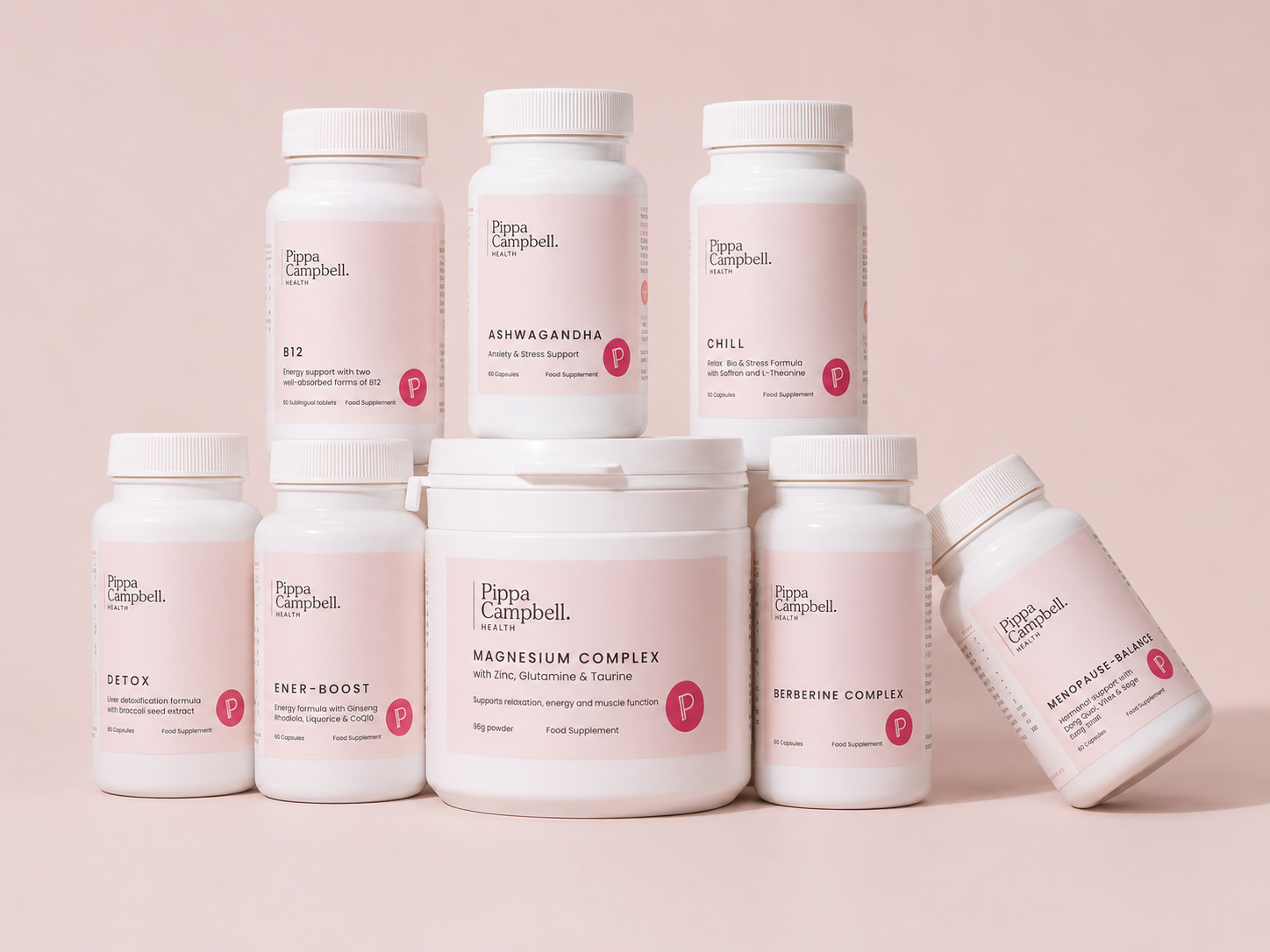
Food and lifestyle changes lay the foundation, but in my experience in clinic at Pippa Campbell Health, targeted supplementation is what makes the real difference. The women who see the most significant and sustained improvement are those who combine both. These are the three supplements I use most with oestrogen dominance.
- Detox: the supplement I reach for most often with oestrogen dominance. It contains broccoli sprout extract as its key ingredient, one of the most researched nutrients for oestrogen metabolism, alongside other nutrients designed to support both phases of the liver’s clearance process. It is not a generic detox product. It is built specifically around the oestrogen clearance pathways.
- Magnesium Complex: magnesium is key in neurotransmitter function, supports the liver’s detoxification processes, and directly addresses the anxiety, poor sleep and mood changes that oestrogen dominance commonly produces.
- B-Complex: B vitamins are essential for liver methylation, one of the core processes through which the body clears used oestrogen. They are also critical for mood regulation and energy production, two areas directly affected by oestrogen dominance.
- Fibre Complex: fibre binds used oestrogen in the gut and carries it out of the body. Without sufficient fibre, that oestrogen is reabsorbed back into the bloodstream rather than excreted. The four-fibre formula including Psyllium Husk, Flaxseed, Konjac and Sugar Beet Fibre works at the gut stage of the same clearance pathway that Detox supports at the liver stage. The two work well together.
Why testing matters and where to start
This is one of the reasons we use DUTCH hormone testing at Pippa Campbell Health rather than relying on standard blood results alone. A blood test taken at a single point in time tells you very little about how your hormones are actually behaving, or how well your body is clearing them. DUTCH testing gives a comprehensive picture of oestrogen, progesterone and the oestrogen clearance pathways, including which metabolic routes your body is favouring. Without this information, any intervention is guesswork.
If you recognise several of the symptoms described above and have been told your blood results are normal, the starting point is always accurate testing. The only way to know what is driving your symptoms is to test properly.
You can find out more about DUTCH hormone testing at Pippa Campbell Health here.
References
Hirschberg AL. Sex hormones, appetite and eating behaviour in women. Maturitas. 2012;71(3):248-256.
Krishnan S, et al. Estradiol, leptin and food cravings in the luteal phase of the menstrual cycle. Physiology & Behavior. 2016;159:15-21.
Oelkers W. Effects of estrogens and progestogens on the renin-aldosterone system and blood pressure. Steroids. 1996;61(4):166-171.
Plottel CS, Blaser MJ. Microbiome and malignancy. Cell Host Microbe. 2011;10(4):324-335.