Hypoglycaemia means low blood sugar. You do not need to be diabetic to experience it, and it is far more common in women than most people realise.
I have experienced this myself. As a functional hormone nutritionist I understood what was happening and why. For most women, these episodes arrive with no explanation at all, and because the symptoms overlap with anxiety and stress, they rarely get properly investigated.
The symptoms can include:
- Light-headedness or dizziness
- Sudden anxiety or feelings of panic
- Heart palpitations
- Shakiness
- Intense hunger that comes on quickly
- Fatigue that hits fast
- Headaches
- Difficulty thinking clearly
- Cold hands and feet
When these symptoms are put down to stress alone, the underlying physiology gets missed. Stress and blood sugar dysregulation are closely connected, but they are not the same thing. Cortisol is the hormone that is supposed to raise blood sugar when it drops, and when cortisol regulation is already disrupted, the body cannot respond properly to those dips. Understanding that connection is what makes the difference.
Why women are more affected
Women are more prone to hypoglycaemia than men, and it tends to be more pronounced in women under 35. But it does not disappear with age. In perimenopause,oestrogen fluctuates significantly and this directly unsettles blood sugar regulation. It also affects the nervous system in ways that make these episodes more frequent and more intense. The decline in DHEA and pregnenolone that comes with perimenopause reduces the body’s resilience to blood sugar dips. I see this regularly at Pippa Campbell Health.
Younger women are particularly affected because of how the nervous system functions. The nervous system operates in two modes: an activating mode, fight or flight, and a calming mode, rest and digest. Women tend to spend more time in the calming, rest and digest mode compared to men and older women. This is associated with higher insulin and lower glucagon, which pushes the body towards lower blood sugar. And when blood sugar does drop, the activating response tends to be sharper, causing a significant surge of adrenaline. That is the sensation of panic or shakiness that so many women experience and cannot explain.
The role of glucagon
Glucagon is the hormone made by the pancreas that raises blood sugar when it falls. In women with hypoglycaemia, the body is often slow to release enough glucagon to push blood sugar back up. The nervous system starts reacting before the body has had a chance to correct the drop. This is why symptoms can feel so severe even when blood sugar has not fallen to a level that would appear on a standard test, which is one of the reasons this gets missed in conventional medicine.
This also explains why reactive hypoglycaemia is so common. Reactive hypoglycaemia means blood sugar drops in the hours after a meal, rather than during a fast. Just after eating is when insulin is at its highest. If insulin is already chronically elevated because of insulin resistance, it pushes blood sugar down sharply and the body cannot keep pace. Women with PMOS (PCOS) are particularly prone to this because insulin resistance is a central feature of the condition.
When the nervous system is the primary driver
Not all hypoglycaemia comes from insulin resistance. In younger women especially, the underlying issue is often a mild dysfunction of the nervous system, sometimes called dysautonomia. This means the nervous system is not switching smoothly between its two modes in the way it should.
Symptoms of dysautonomia include low blood pressure, fatigue, cold hands and feet, IBS, migraines, disrupted sleep and a tendency to low blood sugar. You may have come across the term adrenal fatigue. Dysautonomia is a more precise way to describe what is actually happening physiologically.
Hypermobility and mast cell activation are both closely linked to dysautonomia and can intensify these episodes. If you have a history of food sensitivities, skin reactions, histamine intolerance or very flexible joints, this connection is relevant to you.
In perimenopause, nervous system dysfunction can develop or worsen because of the hormonal changes taking place. Oestrogen fluctuations are a known trigger for nervous system instability, which is why hot flushes, palpitations and blood sugar problems so often appear together.
Where to start
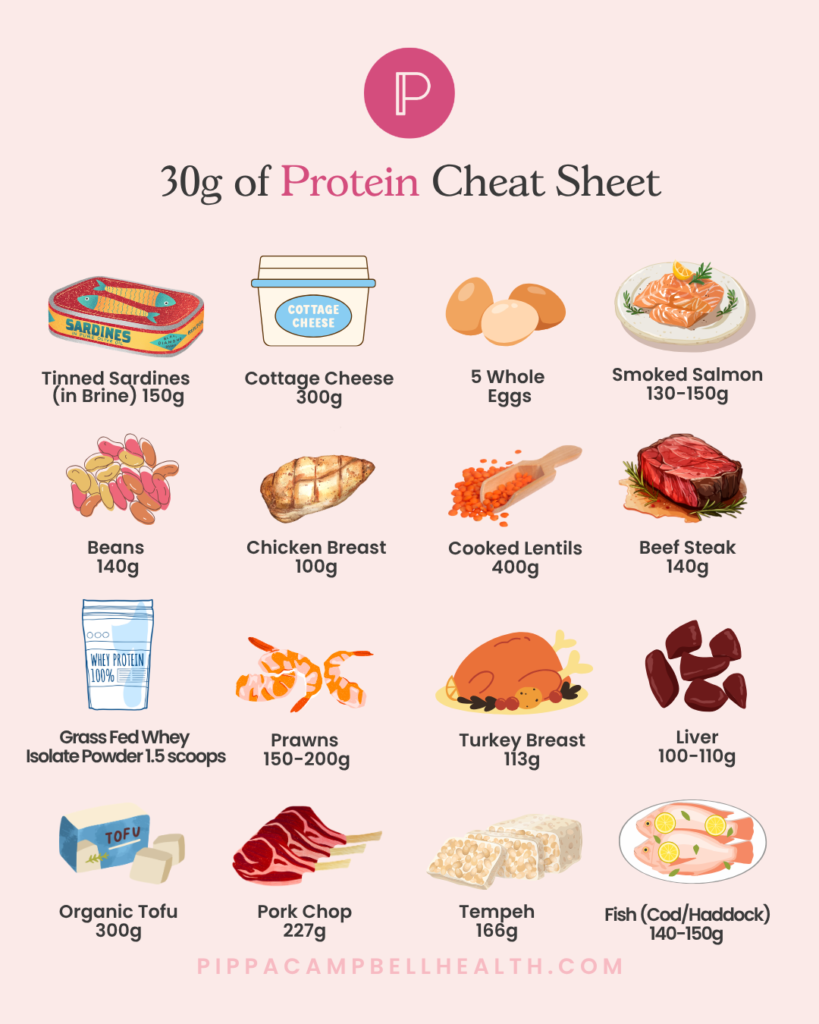
The most impactful change you can make immediately is to eat 30 grams of protein before 9am. This is the foundation. Every breakfast, every day.
What we see in clinic, again and again, is women eating what they consider a healthy breakfast such as fruit, a small portion of yogurt, something light, and wondering why they feel shaky and anxious by mid-morning. A breakfast built primarily on carbohydrate with minimal protein will spike blood sugar and then drop it, and that drop drives the symptoms.
Thirty grams of protein at breakfast looks like two eggs with smoked salmon, 100 grams of chicken, or a protein smoothie built around a high-quality protein powder. The goal is to stabilise blood sugar from the start of the day before anything else.
Electrolytes are essential here, not optional. The nervous system controls both blood pressure and blood sugar, and low sodium combined with poor hydration makes hypoglycaemic symptoms worse by reducing blood volume and allowing blood pressure to fall. Two litres of water a day is the baseline. If symptoms are frequent, an electrolyte supplement with sodium is an important part of the protocol. (See Pippa Loves for recommendations)
The cortisol connection
Cortisol and adrenaline are both supposed to raise blood sugar when it drops. If cortisol regulation is already disrupted, the body cannot respond properly and the symptoms become harder to recover from.
A DUTCH test gives a detailed picture of your cortisol pattern across the day, your DHEA levels and your sex hormones. If these episodes are happening regularly, understanding what is driving them is the logical next step. When we test, we stop guessing.
For blood sugar regulation specifically, chromium is a mineral I use regularly at Pippa Campbell Health. It improves how the body responds to insulin and can reduce the frequency and intensity of reactive hypoglycaemia. It is included in my Meta-Boost formulation for this reason.
Where reactive hypoglycaemia is driven by insulin resistance rather than the nervous system, particularly for women with PMOS, I also use Berberine Complex alongside Meta-Boost. Berberine activates AMPK, the same metabolic pathway activated by metformin, without the prescription, and works well paired with the chromium in Meta-Boost to support more stable insulin response between meals.
For the nervous system symptoms, the anxiety, palpitations and that feeling of being on high alert after a blood sugar drop, I use Chill. It contains saffron and L-theanine, both of which calm the nervous system without causing sedation. When blood sugar drops and the nervous system reacts, addressing both sides matters.
Day-to-day nervous system support
Skipping meals or leaving long gaps without food will reliably make hypoglycaemic symptoms worse. Eating within an hour of waking, prioritising protein at every meal, and avoiding fasting if you are prone to these episodes are all part of the approach I take in clinic.
If your symptoms are worse in the two weeks before your period, that is worth paying attention to. Progesterone falls during this phase and this directly affects blood sugar regulation, increasing the tendency to reactive hypoglycaemia. This is one of the reasons premenstrual anxiety and shakiness are so common, and why they are so often attributed to mood rather than physiology.
The nervous system also responds to what it perceives as safety. Regular meals, time outdoors, breathing practices, adequate rest and social connection all reduce the underlying nervous system reactivity that makes these episodes more likely.
What to investigate if symptoms persist
A DUTCH test to assess cortisol patterns, DHEA and sex hormones is the most useful starting point. A full thyroid panel (not just TSH) is also relevant, because thyroid function directly affects how the body manages blood sugar. Food triggers, particularly dairy and high-carbohydrate meals eaten without protein, are worth examining. Nutrient deficiencies, especially zinc, magnesium and B vitamins, can all affect the body’s ability to regulate blood sugar effectively.
If these episodes are happening regularly, the right place to start is understanding what is driving them. That is what we help women do at Pippa Campbell Health.
If you are not sure where to begin, a Discovery Consultation is a good starting point. It is a focused 15-minute session with a Pippa Campbell Method practitioner specialising in naturopathic endocrinology, and the consultation fee is redeemable against any test or package booked within 72 hours.