Progesterone is often described as the calming hormone. It supports sleep, steadier moods, regular cycles and protects the lining of the womb. In perimenopause, when ovulation becomes less consistent, progesterone is usually the first hormone to decline.
So when symptoms such as anxiety, poor sleep, heavy periods or PMS begin, progesterone is frequently prescribed.
For many women, it helps.
For others, it feels more complicated.
In clinic, this is what we hear:
“It worked at first.”
“Then it stopped.”
“I felt worse on it.”
“It helped my friend but not me.”
When a client tells us this, our assessment focuses on two areas:
- The form of progesterone
- The health and responsiveness of the progesterone receptor
Progesterone is not a single uniform product, and its effectiveness depends on more than the milligrams prescribed.
Form matters
ProProgesterone comes in different forms:
- Oral micronised progesterone
- Vaginal progesterone
- Topical creams or serums
- Troches
- Synthetic progestins used in some contraceptives and HRT
They behave differently in the body.
Oral progesterone passes through the liver before it circulates. During this process, it is converted into calming metabolites such as allopregnanolone. For some women, this is why oral progesterone improves sleep and reduces anxiety.
Vaginal progesterone bypasses that first liver step. It does not produce the same level of calming metabolites.
Topical absorption varies between individuals. Troches are absorbed through the lining of the mouth.
Synthetic progestins are structurally different from body-identical progesterone. They bind differently at the progesterone receptor and can produce very different effects. Many side effects attributed to “progesterone” are in fact reactions to synthetic progestins.
Choosing the correct form is essential. It can determine whether you feel better, unchanged or worse.
Progesterone has to bind to a receptor
Even when the form is appropriate, progesterone still has to attach to its receptor inside the cell.
That receptor must be healthy and responsive.
You can have adequate progesterone levels on a blood test and still not feel the benefit if receptor function is impaired.
Three main factors interfere with progesterone receptor responsiveness:
- Chronic stress
- Inflammation
- Oxidative stress
Chronic stress and cortisol
Progesterone production depends on ovulation. Ovulation depends on a stable stress response.
If cortisol is elevated at night, flattened across the day or chronically dysregulated, ovulation weakens and progesterone declines.
Cortisol patterns also influence how hormone receptors respond at a cellular level.
This is why we assess cortisol patterns properly rather than relying on a single blood reading. Hormones operate in rhythm, and understanding that rhythm changes how we approach treatment.
Magnesium plays a central role in regulating the stress response and supporting receptor function. Zinc contributes to the structural integrity of hormone receptors, the same receptors that stress and inflammation are working against.
This is why:
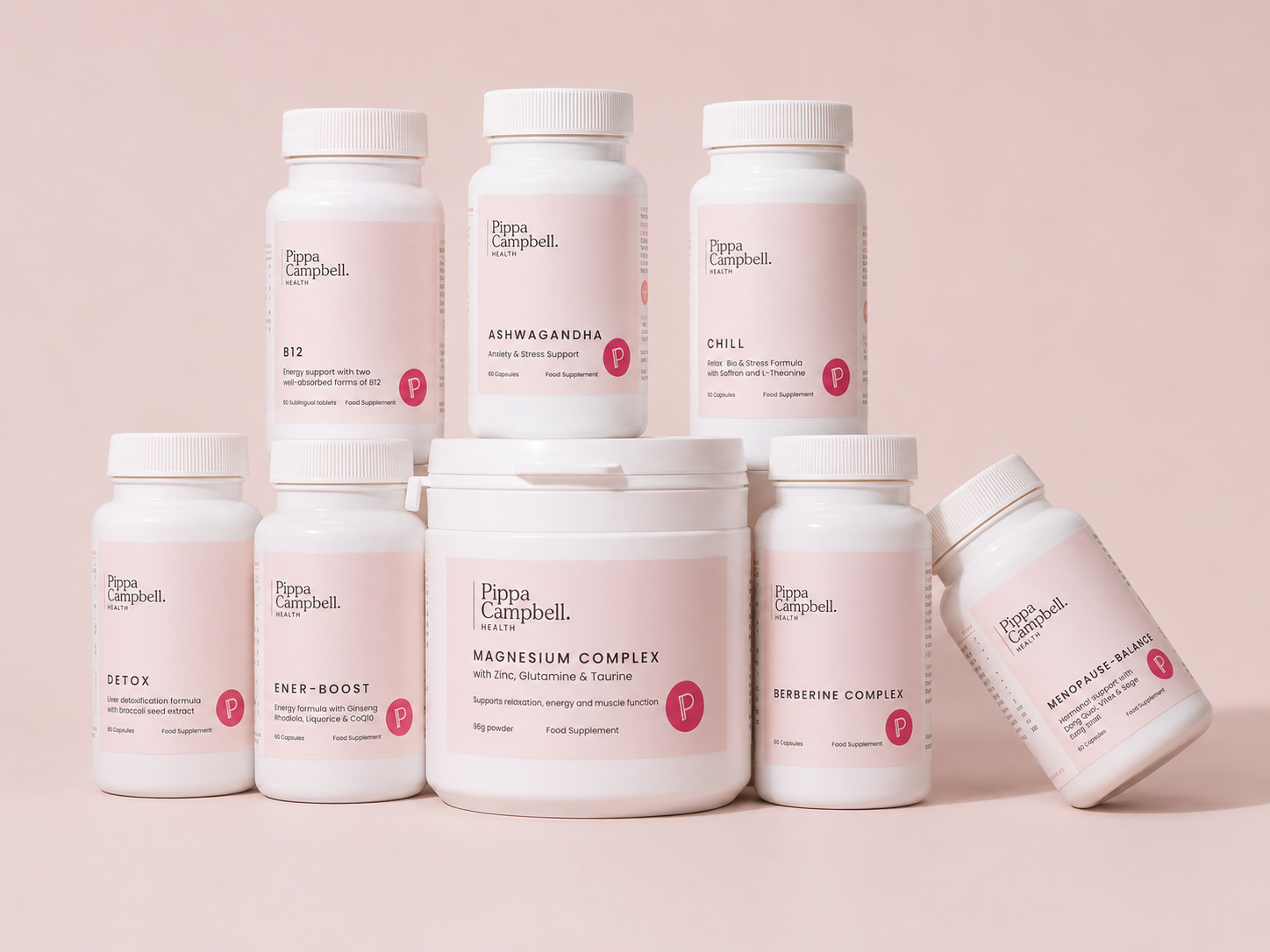
- Magnesium Complex provides magnesium and zinc
Inflammation reduces receptor sensitivity
Inflammatory cytokines such as IL-6 and TNF-α reduce progesterone receptor density and weaken their response.
Common drivers include:
- Gut dysbiosis
- Insulin resistance
- Autoimmune activity
- Chronic stress
- Poor sleep
Inflammation changes how cells respond to hormones. If the cellular environment is inflamed, hormone signalling becomes less efficient.
Reducing inflammatory load improves receptor sensitivity. This is why we often address omega-3 intake, blood sugar balance and gut health alongside any hormone prescription.
Oxidative stress alters receptor structure
Hormone receptors are proteins. Their structure determines their function.
Oxidative stress damages protein structure, which can impair receptor performance.
Glutathione is one of the body’s primary antioxidants. When glutathione is low, receptor function can weaken.
Supporting detoxification pathways and antioxidant capacity improves the terrain in which progesterone receptors sit.
This is why:
- Detox provides glutathione support and broccoli sprout powder
Sulforaphane from broccoli sprouts upregulates detoxification enzymes and reduces inflammatory load, improving the cellular environment in which hormone receptors function.
Micronutrients influence progesterone action
Several nutrients directly affect progesterone production and receptor expression:
- Zinc supports receptor structure
- Magnesium supports intracellular energy production required for hormone action
- Selenium protects receptor proteins from oxidative stress
- Vitamin A influences progesterone receptor production
- Vitamin D regulates hormone receptor gene expression
- Active vitamin B6 supports progesterone production after ovulation
- Iodine supports thyroid hormone production
- Thyroid hormones influence progesterone receptor expression
Thyroid function is particularly important.
Triiodothyronine, or T3, regulates gene expression, including the genes that produce steroid hormone receptors. If T3 is low, fewer progesterone receptors may be produced. The same principle applies to oestrogen and androgen receptors.
Progesterone levels can appear adequate, yet the number of available receptor sites may be reduced.
Thyroid hormone also supports mitochondrial energy production. Hormone action inside the cell requires ATP. If cellular energy production is compromised, the response to steroid hormones can feel weaker.
This is why we assess thyroid status alongside progesterone in clinic.
And this is also why:
- Meta-Boost contains iodine and selenium
- Vegan D3 Complex provides vitamin D and vitamin A
- B Complex provides active B6
Each of these nutrients has a defined biochemical role in hormone production, receptor expression and cellular response. We use them to support the pathways progesterone depends on.
Where we usually start
Four of the nutrients above are worth understanding in more depth, because they are where we most often start.
Vitamin D3, taken with K2
Low vitamin D3 directly reduces how well progesterone can work. The two operate through overlapping pathways, regulating gene expression, supporting the nervous system and reducing inflammation throughout the body. When D3 is insufficient, progesterone cannot do what it is capable of doing.
K2 is just as important and often overlooked. Vitamin D3 increases calcium absorption. Vitamin K2 directs that calcium into bone and teeth rather than into the arteries. The two should always be taken together.
A significant proportion of women in the UK are deficient in one or both. Vegan D3 Complex delivers algae-sourced D3 alongside K2 and vitamin A, the three co-factors that need to be present for D3 to do its job properly. We recommend it year-round, not only in winter.
Magnesium, in the right form
Ninety per cent of adults do not get sufficient magnesium from diet alone. Magnesium supports sleep quality, nervous system regulation, blood sugar balance and heart rhythm, much of which overlaps with what progesterone is trying to achieve.
Magnesium Complex also contains zinc, for the same reason as before: progesterone has over three hundred receptor sites in the body, and those sites need to be in good condition for progesterone to bind effectively and have its full effect.
Form matters too. Many supplements use a single form of magnesium, often magnesium oxide, which is poorly absorbed. Our formula uses multiple forms, each chosen for its absorption profile and specific properties.
B Complex, to support the supplements
Vitamin B6 directly affects how much magnesium your cells can absorb, and it is also essential for hormone metabolism. Stress depletes B vitamins quickly. Long-term use of hormonal contraception depletes B6 and folate. Poor gut health reduces absorption further. Without adequate B6, magnesium cannot do everything it is capable of.
B Complex contains all eight B vitamins in active, bioavailable forms, including methylated folate. We recommend taking it at a different time of day to Magnesium Complex for best results. It should never be combined with Complete Women’s Multi, as the two formulas overlap on B vitamins.
Meta-Boost, for thyroid support
Iodine and selenium support thyroid hormone production and the conversion of T4 into active T3, the step that standard thyroid testing often misses. Meta-Boost provides both, alongside zinc.
Meta-Boost is not suitable for anyone with hyperthyroidism. If that applies to you, this is one to discuss with a practitioner rather than start on your own.
If you are already taking progesterone and want to give your body the best chance of responding well, Vegan D3 Complex, Magnesium Complex and B Complex are a sensible foundation, with Meta-Boost added where thyroid support is relevant. All are available in the main shop.
Why proper hormone testing matters
Standard blood tests show circulating hormone levels. They do not show:
- Progesterone metabolites
- Cortisol rhythm
- DHEA levels
- Oxidative stress markers
- Oestrogen metabolism
- Methylation status
Advanced DUTCH testing allows us to see how you are producing and breaking down progesterone, not just how much is present in the blood.
Some women are more 5-alpha dominant. They convert progesterone into calming metabolites such as allopregnanolone and often respond well to oral micronised progesterone.
Others are more 5-beta dominant. They may not generate the same calming metabolites and can feel flat or unchanged on oral progesterone. These women often tolerate alternative routes more effectively.
The metabolite pattern, alongside cortisol rhythm and oestrogen metabolism, determines whether progesterone is the right first step, which form to use and how dosing should be structured.
If progesterone has not helped you
If progesterone improved things initially and then stopped, or if you felt worse after starting it, the explanation is not simply about dose.
It may be the wrong form for you.
It may be that stress or inflammation is affecting how your cells respond.
It may be that your thyroid needs attention.
It may be that your metabolite pattern suggests a different route would suit you better.
Your body is responding to what is happening internally.
Progesterone does not work in isolation. It functions within the context of your stress levels, your thyroid health, your gut, your nutrient status and your ability to clear hormones effectively.
When we assess the whole system, rather than focusing only on the prescription, progesterone is far more likely to work as it should.
In clinic, we use comprehensive hormone testing to understand exactly what is happening.
On the DUTCH Complete test, progesterone metabolites are measured from dried urine samples collected across the day, giving us a 24-hour picture of how you are producing and metabolising progesterone, alongside your cortisol rhythm and wider hormone pathways.
For women who are still cycling, DUTCH Cycle Mapping allows us to see how progesterone rises and falls across the entire month. This is particularly valuable in perimenopause, when ovulation becomes inconsistent and progesterone output can fluctuate from cycle to cycle.
If progesterone has not worked for you, testing allows us to understand why and to correct it properly.
If you want to understand exactly what your hormones are doing, you can book a DUTCH hormone plan here. We will analyse your results in detail and create a structured plan tailored specifically to you.
If you’re not sure which of these applies to you, or you’re struggling to make sense of your symptoms, you don’t have to figure it out on your own. You can book a Discovery Consultation, a 15-minute focused session with a Pippa Campbell Method trained practitioner specialising in naturopathic endocrinology, to review your symptoms and point you in the right direction.