If you’ve ever tried intermittent fasting and ended up feeling more tired, more anxious, more hungry, and sleeping worse… you’re not alone.
I see this all the time with women in my clinic, especially those juggling busy lives, high stress, and the hormonal changes of perimenopause and menopause. You try the classic 16:8 window because that’s what works for “everyone else”… only to find yourself with blood sugar dips, powerful cravings, and a nervous system that feels wired but exhausted.
Just to reassure you: the issue isn’t your willpower — it’s the wrong type of fasting for your physiology.
Women under stress, particularly in midlife, need a completely different strategy. One that doesn’t push your cortisol and adrenaline higher. One that supports, rather than disrupts, your sleep. One that helps build metabolic flexibility without starving your nervous system of the safety cues it needs.
This is where my guide to fasting that supports hormones and reduces stress comes in. A gentle, supportive approach to fasting designed specifically for women with busy, demanding lives.
Why Women Need a Different Approach to Fasting
Most intermittent fasting research has been done on men or very low-stress populations. But midlife women are navigating:
• A more reactive HPA axis (your stress system)
• Hormonal fluctuations
• Naturally declining insulin sensitivity
• A higher need for protein
• A greater risk of muscle loss during calorie restriction
When you add a long fasting window on top of poor sleep, heavy training, caffeine-first mornings, or chronic stress, your body reads it as another threat.
This is what I call the ‘adrenaline overdrive’ and once you’re in it, everything feels harder. Adrenaline overdrive can happen whether your cortisol is low, high, or simply out of sync. When your nervous system is under strain — poor sleep, skipped meals, fasting windows that are too long, or chronic stress — the body often leans on adrenaline to keep you going. That’s why you can feel wired, hungry, shaky, or wide awake at 3am even if your cortisol doesn’t look “extreme” on a basic blood test. Adrenaline becomes the back-up energy signal, and it’s incredibly stimulating, which is why those symptoms feel so immediate.
What complicates this further is how you process cortisol. Some people naturally shift more of their cortisol into cortisone, which is essentially the “switched off” or inactive form. If your body prefers that pathway, you may feel the effects of low cortisol even when you’re producing plenty — and again, adrenaline steps in to compensate. This is exactly the sort of pattern the DUTCH test reveals. It shows your whole cortisol rhythm, how much is being converted into cortisone, and whether adrenaline is driving the wired-and-tired feeling you get with fasting in midlife.
Adrenaline Overdrive symptoms include –
• You wake hungry and wired
• Your sleep worsens
• You wake at 2–4am with a wired mind
• Afternoon crashes hit harder
• You feel shaky or on edge between meals
• You get irritable quickly, especially when hungry
• Cravings feel uncontrollable
• Fat loss completely stalls
The good news? You can absolutely fast safely and feel better as long as you follow a plan designed for your physiology.
Fasting That Supports Your Hormones & Reduces Stress
Start Here:
• Begin with 12:12
A simple 12-hour overnight digestive rest. For example: finish eating at 7pm, breakfast at 7am.
• Earlier eating windows work best
Windows like 8am–6pm or 10am–6pm support circadian rhythm and insulin sensitivity.
• Progress slowly
Only stretch to 14:10 on days when stress is low and sleep was good.
• Break your fast properly
Aim for 30–40g protein plus fibre blended with berries and flax seeds.
The Non-Negotiable Adrenaline Overdrive Rules
• No fasting after poor sleep — this is the fastest way to spike adrenaline and cortisol.
• Don’t stack stressors — avoid longer fasts on high-stress or heavy-training days.
• Train after eating and not on an empty stomach— strength training and HIIT should always be done within your eating window.
• Listen to your warning signs — feeling cold, irritable, anxious, or noticing irregular periods means the fasting window is too long.
Signs You Know It’s Working
• Energy stays stable through the afternoon
• Fewer night wakings, easier sleep
• If you’re still cycling — regular, predictable periods
• Moods feel steadier and cravings ease
These are the signs your nervous system is feeling safe.
The Most Common Fasting Misunderstandings (and What Actually Works)
Common Misunderstanding 1 — “Longer fasting windows get better results.”
For many women, long fasts (16 hours+) increase stress hormones, worsen sleep, and drive cravings.
Shorter, earlier windows show better outcomes for blood sugar, blood pressure, and oxidative stress — even without weight loss.
Aim for:
→ 12–14 hours most days
→ 14–16 hours only when sleep and stress are excellent
Common Misunderstanding 2 — “If fasting isn’t working, fast longer and train harder.”
This is exactly how women end up in burnout, weight-loss plateaus, and mineral depletion.
Poor sleep alone reduces insulin sensitivity by up to 30%. Add hard training and long fasting windows, and your body is forced into survival mode.
What to do instead:
→ After <6.5 hours sleep: stick to 12–13 hours
→ Do strength training after you have eaten
→ Delay caffeine until you’ve eaten protein
Common Misunderstanding 3 — “Any 8-hour window works.”
Your body is most insulin-sensitive in the morning. Eating late in the evening disrupts sleep, blood sugar, and appetite hormones.
Better choices:
→ 9am–7pm
→ 10am–6pm
→ 8am–6pm
→ Keep dinner 3+ hours before bed
Common Misunderstanding 4 — “You must fast to lose weight in midlife.”
This is not true!. The strongest research for women in their 40s+ consistently highlights:
• Adequate protein (1.2–1.6g/kg)
• Strength training 3x weekly
• Quality sleep
• Balanced blood sugar
A gentle 12:12 window supports this without stressing the system.
Who Should Avoid Fasting Completely
Do not fast (unless medically supervised) if you are:
• Pregnant, TTC, or breastfeeding
• Underweight
• Recovering from an eating disorder
• On insulin
• Dealing with adrenal insufficiency, Cushing’s, or uncontrolled thyroid disease
• In a flare of active GI disease
• Recovering from illness
• An endurance athlete in a heavy training block
• Experiencing irregular periods due to low energy availability
If in doubt it’s best to get advice from your doctor or health practitioner before starting.
How to Adjust Fasting to Your Hormonal Phase
Perimenopause
Your sleep may be broken by night sweats or cortisol spikes.
→ After a bad night → shorten your fast
→ Prioritise electrolytes, protein, and early daylight
Menstrual Cycle
Luteal phase (PMS week): higher hunger and higher body temp
→ 12–13 hours is ideal
→ Earlier dinners help sleep
Follicular phase: best time for 14-hour fasts and heavier training
Menopause
Focus on:
→ Blood sugar stability
→ Strength training
→ Higher protein intake
→ Gentle 12–14 hour windows
Try this simple 4-Week Fasting Guide to Reduce Stress
Week 1 — Sleep First
• 12:12 nightly
• Dinner 3+ hours before bed
• Track sleep quality, energy, mood
Week 2 — Eat Earlier, More Protein
• 13–14 hour window
• Break your fast with 30–40g protein (Grass Fed Whey Protein powder in Pippa Loves, or eggs + Greek yogurt)
• Add fibre (chia, berries, veg)
Week 3 — Strategic 14-Hour Windows
• Only on low-stress, good-sleep days
• Strength training within the eating window
• HIIT max 15–20 mins and always after eating
Week 4 — Personalise
• If doing well: 14:10 on 2–4 days/week
• If tired or irritable: reduce to 12–13 hours
• Review cycles, sleep, hunger, mood
What to Eat: Pippa’s Go-To Fast Breaker
Protein first
Aim for 30–40g. Examples:
• Protein Powder
• Eggs
• Greek yoghurt
• Fish or chicken
Fibre for blood sugar balance
• Chia seeds
• Flaxseed
• Berries
• Leafy greens
• Lentils or beans
Carbs when needed
• Sweet potato
• Quinoa
• Legumes
• Berries
(especially on training days or the week before your period)
Healthy fats
• Avocado
• Olive oil
• Nuts/seeds
Electrolytes
If you’re perimenopausal, busy, or training — electrolytes are essential.
Red Flags: Signs Your Fasting Window Is Too Long
Stop or reduce immediately if you notice:
• Worsening sleep
• Feeling cold
• Low moods or irritability
• Irregular cycles
• Hair shedding
• Afternoon crashes
• Strong evening cravings
Your body is telling you it needs more nourishment not more discipline.
My Pippa Campbell Method (PCM) that I recommend and follow myself
I prioritise:
• Protein
• Strength training
• Recovery and sleep
• Gentle, circadian-aligned fasting
And the results not only for for me but also for my clients are dramatically better:
More energy. Better mood. Easier fat loss. Stronger muscles. More stable hormones.
Sometimes the most transformative thing you can do is fuel your body properly.
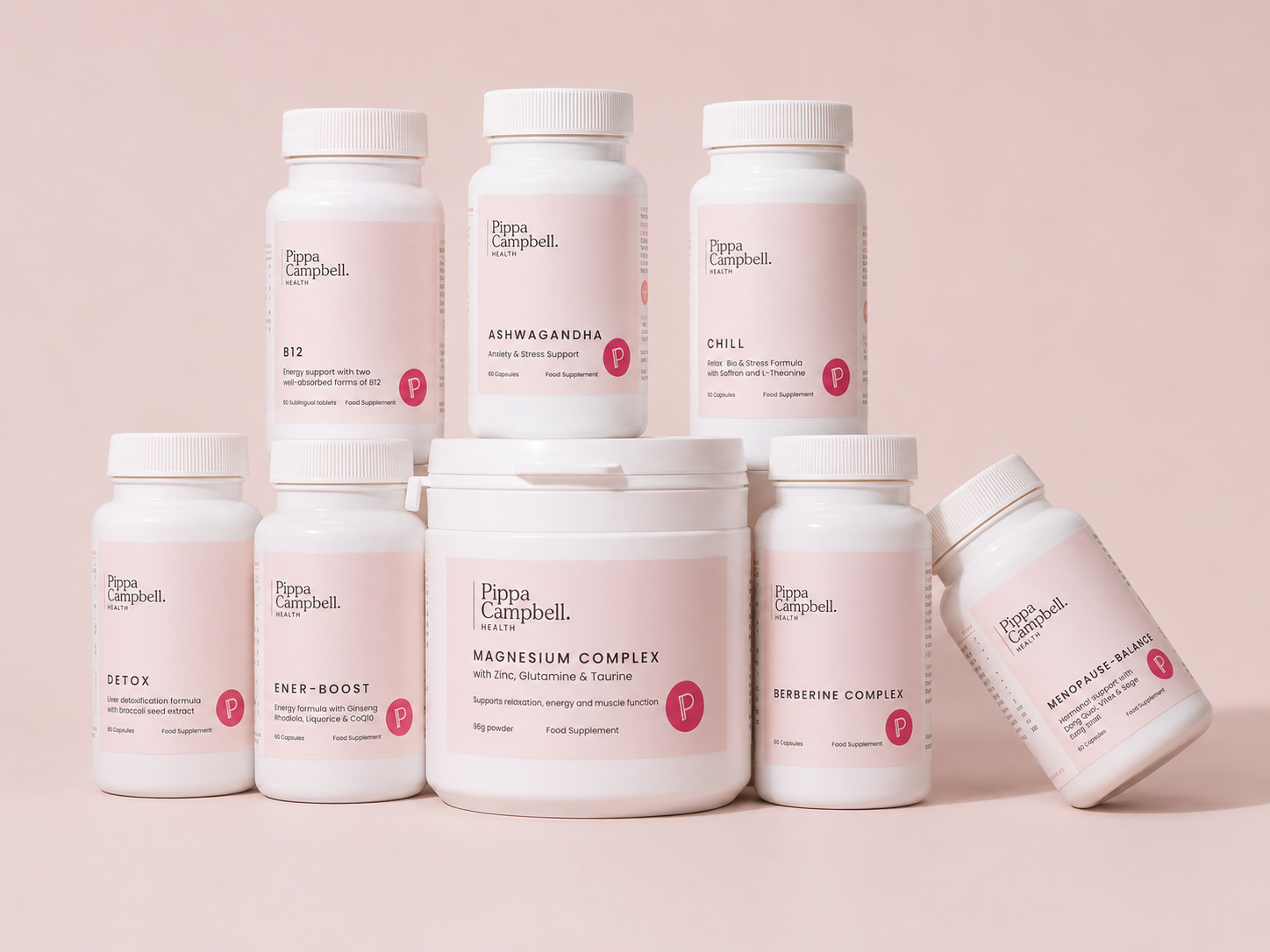
To support fasting safely and effectively, I often recommend PCH Meta-Boost to enhance metabolism and weight loss, PCH Chill, PCH Ashwagandha and PCH Magnesium Complex to calm the stress response, and PCH Ener-Boost for steady, natural energy — all formulated to work alongside your hormones, not against them.
To Conclude
Fasting can be a powerful tool but only when used in a way that supports your hormones, nervous system, and lifestyle.
For high-stress women and women in midlife, the goal isn’t to fast for as long as possible.
It’s to find the fasting rhythm that helps you:
✔ Sleep well
✔ Maintain stable moods
✔ Reduce cravings
✔ Protect muscle
✔ Support metabolism
✔ Feel energised
This is fasting that works with your body… not against it.
If you’d like more support with balancing your hormones in perimenopause, watch my free video: “5 Steps to Balancing Your Hormones.” It’s packed with practical, easy changes you can start today to improve energy, sleep, cravings and mood.
References
- Charlot A, et al. Importance of Aligning Food Habits with the Circadian Clock. PMC. 2021. https://pmc.ncbi.nlm.nih.gov/articles/PMC8143522/
- Jamshed H, Beyl RA, Della Manna DL, Yang ES, Ravussin E, Peterson CM. Early Time-Restricted Feeding Improves 24-Hour Glucose Levels and Affects Markers of the Circadian Clock, Aging, and Autophagy in Humans.Nutrients. 2019. https://pubmed.ncbi.nlm.nih.gov/31151228/
- Manoogian ENC, et al. Time-Restricted Feeding for the Prevention and Management of Metabolic Diseases.Endocrine Reviews. 2022. https://academic.oup.com/edrv/article/43/2/405/6371193
- Singh P, Beyl RA, Stephens J, et al. Effect of sleep restriction on insulin sensitivity and energy metabolism in postmenopausal women: A randomized crossover trial. Obesity. March 2023. https://www.researchgate.net/publication/369664721_Effect_of_sleep_restriction_on_insulin_sensitivity_and_energy_metabolism_in_postmenopausal_women_A_randomized_crossover_trial
- Buxton OM, et al. Sleep Restriction for 1 Week Reduces Insulin Sensitivity in Healthy Men. PMC. 2010. https://pmc.ncbi.nlm.nih.gov/articles/PMC2927933/
- Sardeli AV, Komatsu TR, Mori MA, Gáspari AF, Chacon-Mikahil MPT. Resistance Training Prevents Muscle Loss Induced by Caloric Restriction in Obese Elderly Individuals: A Systematic Review and Meta-Analysis. Nutrients. 2018;10(4):423. https://doi.org/10.3390/nu10040423
- Thomas E, et al. The effect of resistance training programs on lean body mass and physical performance in postmenopausal women: A systematic review and meta-analysis. PMC. 2021. https://pmc.ncbi.nlm.nih.gov/articles/PMC8595144/